Research Notes
Strategy
- Short-term momentum in Technology and Industrials closed Wednesday in the 1st percentile of history dating back to 1985, marking one of the swiftest and largest momentum unwinds on record.
- With 61% of cap goods and 37% of semis making 20-day lows, oversold conditions warrant a bounce, but don't mistake a bounce for the end of the unwind.
- The AI trade is shifting from an "everyone wins" environment to one where the market has to separate the actual winners from the losers.
- Expect momentum to become less dominant: some former laggards will emerge through breakouts, while some former laggards will become losers through breakdowns.
- Consensus Inc bullish sentiment is back in its upper decile, but historically the signal has only a 12% win rate, making it a poor standalone reason to turn bearish.
- The statistics look better than the actual outcomes. With odds that poor, the signal is statistically interesting but practically difficult to trade.
- What matters more is the synchronization: ETF flows, COT data, and other sentiment surveys are also showing elevated optimism.
- Sentiment works best when "everyone" is thinking the same way. We're unimpressed by the individual signal, but increasingly mindful of what the aggregate is telling us.
- Crude has broken through the downtrend that capped every rally since February, while 2-year and 10-year yields have simultaneously broken to new highs.
- The move pushed our Yield Impact Model to the 100th percentile, historically a notable headwind for equities over the next quarter.
- The risk/reward is becoming less compelling: investors are being asked to hold equities over T-bills while the Market Cycle Clock sits in a zone where the S&P has annualized just 0.56% vs 9.03% historically.
- Put simply, the pot is increasingly leaning against the cards in our hand.
- The 2-year yield remains the key variable, with markets now leaning toward a Fed hike and our Yield Impact Model continuing to signal a meaningful headwind for equities.
- Credit remains the arbiter: tight BBB spreads keep us long, but a decisive widening would force a reassessment.
- Positioning is increasingly crowded across ETF flows, large speculators, and small NDX traders reinforcing the message to buy oversold leadership rather than chase index strength.
- Watch deGraaf video
Economics
- The labor market strengthened meaningfully in August, with payrolls up 162k, prior months revised higher, and the three-month average improving to 71k.
- The underlying details were stronger than the headline: hours worked increased, wages rose 0.3%, hiring breadth improved, and involuntary part-time employment fell sharply.
- Private demand remains solid, particularly in goods production, with construction adding 22k jobs and manufacturing 16k as factory hiring continues to broaden.
- Stronger hours worked leave less room for productivity growth, potentially keeping pressure on unit costs and inflation.
- The household survey also showed diminishing slack, with employment up 569k, participation rising, and more workers voluntarily leaving jobs.
- The report weakens the case for the Fed doves. With inflation already above target and the labor market reviving, there is little labor-market justification for delaying a hike.
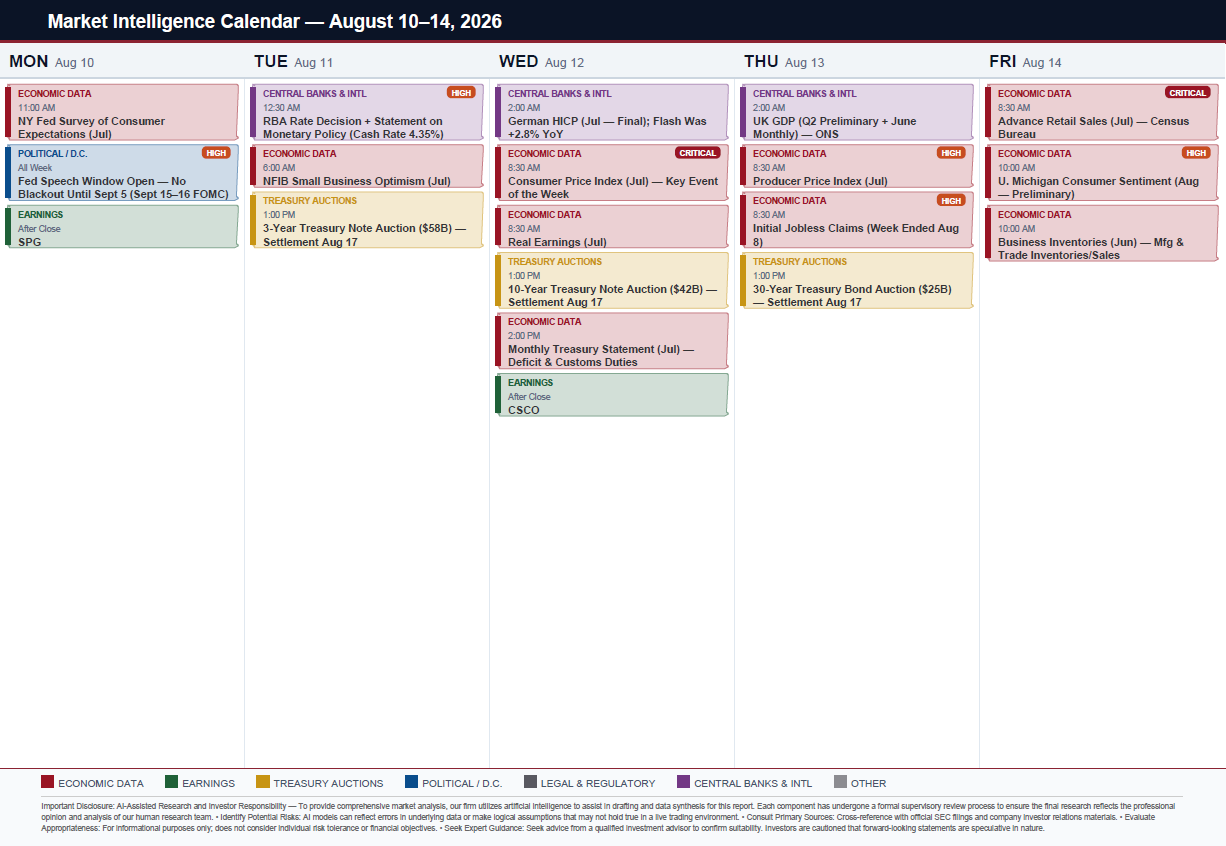
- Waller is leaning toward a September hold, but next week's CPI is the swing factor. With policy only mildly restrictive, a hot print could quickly put a hike back on the table.
- Despite recent inflation improvement, Waller still sounds one bad inflation print away from tightening, leaving the bar for a hike relatively low.
- The Fed's shifting rhetoric lacks a clear explanation for why inflation should slow on its own, particularly with AI capex, tariffs, and the Middle East conflict and financial conditions still posing upside risks.
- Services activity accelerated in August, with the ISM Services PMI rising to 55.4, driven by the strongest business activity and new orders readings in several years.
- Hiring isn't following the growth signal, with employment remaining in contraction at 47.8. Stronger output without additional labor points toward improving productivity.
- Prices are the bigger concern: prices paid jumped to 72.6, the highest since August 2022, as tariffs and Middle East disruptions continue to pressure costs.
- Manufacturing expanded for an eighth straight month, with the ISM at 54.6 and production remaining strong at 58.3, consistent with roughly 2.4% real GDP growth.
- Forward-looking demand softened, with new orders, backlogs and employment all declining, though low customer inventories remain supportive of future production.
- Cost pressures remain elevated, with prices paid at 71.1 as tariffs, higher energy costs and AI-related component shortages continue to pressure manufacturers.
- Construction spending fell 0.5% in July and 3.8% YoY, led by continued housing weakness as residential outlays declined for a fifth straight month.
- AI remains the major exception, with data center construction surging 57.2% YoY, while factory construction has fallen 21.7%.
- The housing downturn is increasingly a labor-market story, with weaker residential spending pointing toward a rollover in construction employment in the months ahead.
 Sector Ranks
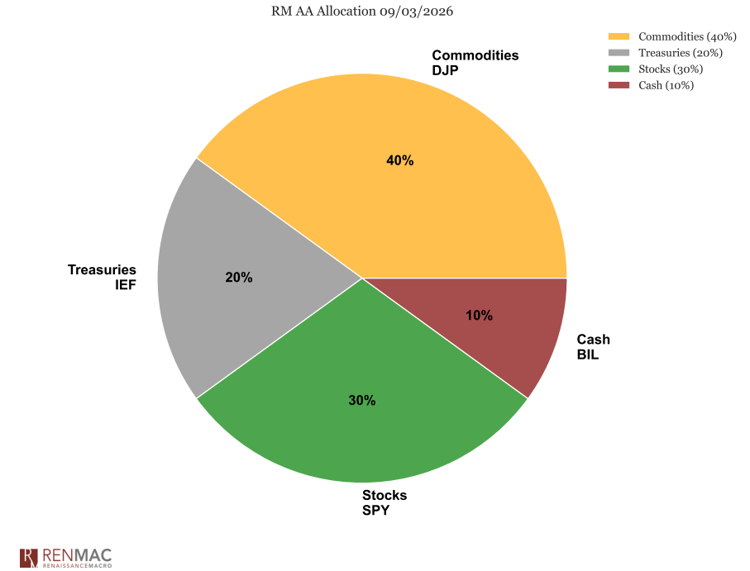
 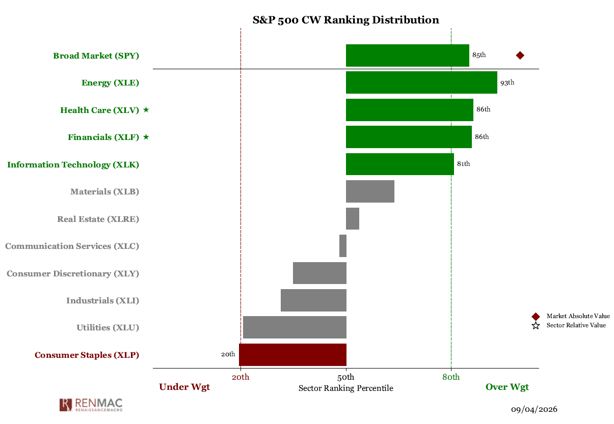 Chart of the weekThe market cycle clock has shifted toward slower growth with inflation holding steady, a backdrop that argues for less beta and lower return expectations while increasing the risk of a policy mistake. Energy, financials, and healthcare remain best positioned, while utilities, real estate, and industrials are deteriorating. Tech remains technically strong, but its historical performance in this phase of the cycle warrants caution.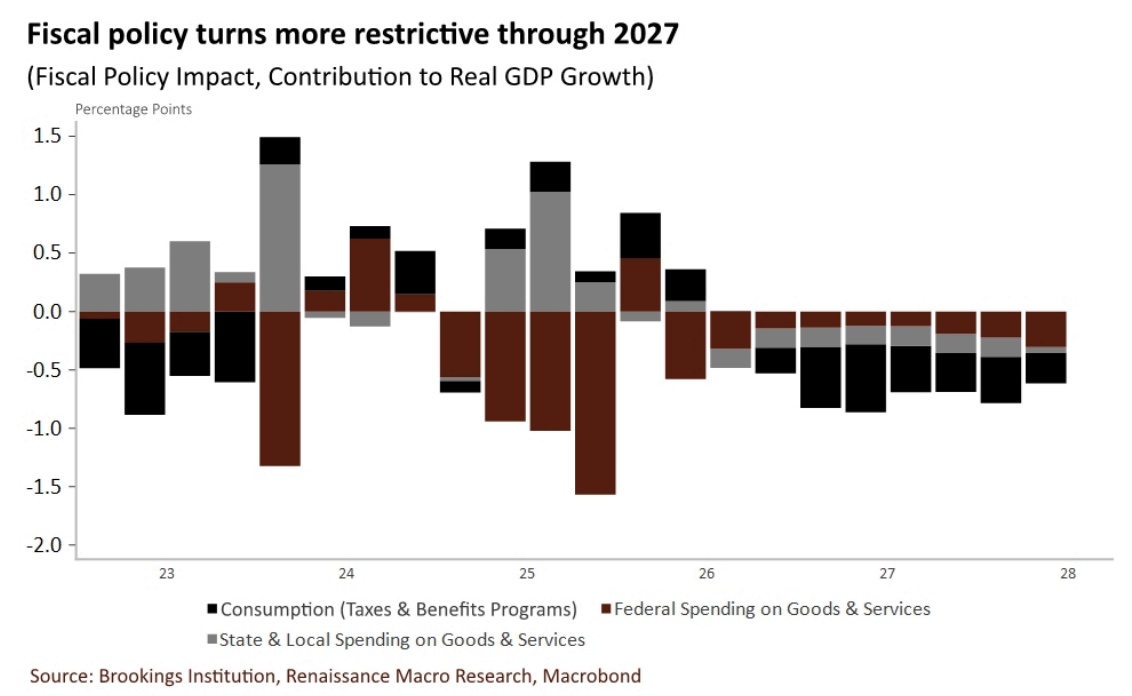
RenMac Off-Script Podcast

RenMac Calendar
Research Notes
Economics
- US labor market continues its downtrend. Weekly job postings continue to trend down, layoffs picking up, quits are cooling.
- March data showed broad economic weakness, with declines in services, confidence, housing, and commercial real estate.
- Rising inflation, weakening job outlooks, and cautious business spending point to growing economic strain.
- Home prices are cooling, which may curb spending as household wealth dips and the savings rate edges higher.
- The rebound in capital goods shipments looks fragile, with growth mostly tied to tech and broader investment plans weakening.
- New tariffs could cut 0.5% from GDP, strain trade ties, and raise car prices before production shifts take effect.
- Auto repossessions are at their highest since 2009, and tariffs may push buyers to the used market, keeping prices elevated.
- Despite trade tensions, signs of de-escalation and strong profits offer some cushion, with markets already pricing in much of the downside.
- Q4 growth was lifted by consumer and government spending, but with investment falling and key supports fading, a broader slowdown seems likely.
Strategy
- Market technicals show potential for a rebound. We think Mag7 approaches 50dma and potentially crosses through, getting to overbought, high beta stocks slowly recovering, and excessive outflows in IWM and SPY could fuel a tactical bounce.
- Remember, this was a beta-driven correction, not a momentum-driven one.
- Remember, this was a beta-driven correction, not a momentum-driven one.
- Bullish signals may re-emerge if a high percentage of stocks move about their 20dma and hit 20-day highs, suggesting a reassertion of the bull trend.
- Despite heightened policy uncertainty and a dark cross in tech, strong credit markets and sentiment tied to returns suggest the current pessimism may be overdone.
- Semi's continue to weaken, with even "good" ones coming under pressure.
- Staples pulled back at resistance levels, maintaining relative downtrend. Sharp unwind in beta and extreme underperformance suggests continued downward pressure.
- Transports reiterate bearish trend but flagging oversold and in "seller's frenzy". Expect short-term tactical bounce but fade the move.
Policy
- Debt limit deadline ("X-Date") likely between July and October, with resolution hinging on reconciliation or bipartisan deal amid uncertain cash flows.
- Delays risk market volatility and a Moody's downgrade, raising U.S. borrowing costs.
- Delays risk market volatility and a Moody's downgrade, raising U.S. borrowing costs.
- Trump will announce reciprocal tariffs on April 2, targeting about 15 key partners; recent moves on oil, autos, and threats to the EU and Canada may be strategic leverage.
- Section 232 is being used more broadly to justify tariffs on national security grounds, covering autos, copper, timber, and pharma, with an emphasis on U.S. production.
- Tariff timing and scope remain unclear, with Trump using them as a flexible tool, adding to market uncertainty.
Asset Allocation Model
 Sector Ranks
  Chart of the week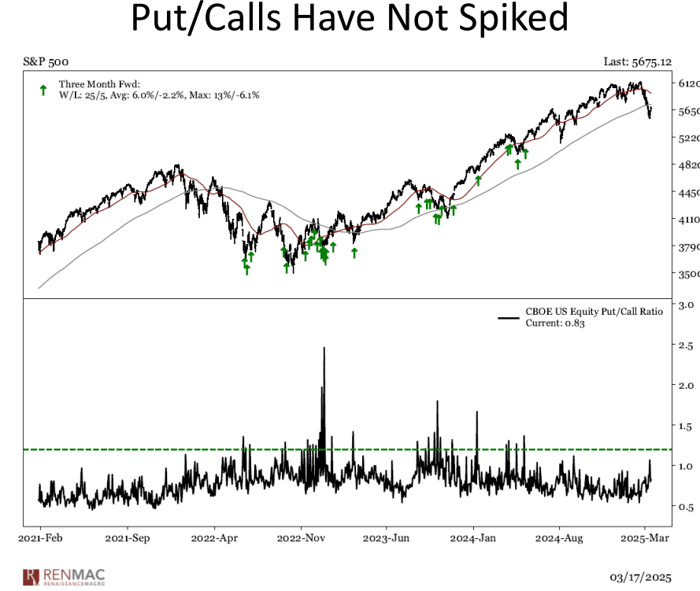
Sector Ranks Chart of the week