Research Notes
Strategy
- Rates are all the rage here, and rightfully so with the 2-year breakout after having broken the downtrend, putting the bond market as Exhibit A as something working against equities.
- Our yield impact model which has a pretty good t-stat to forward returns for the S&P, and as we get into the 100th percentile it starts working against equities.
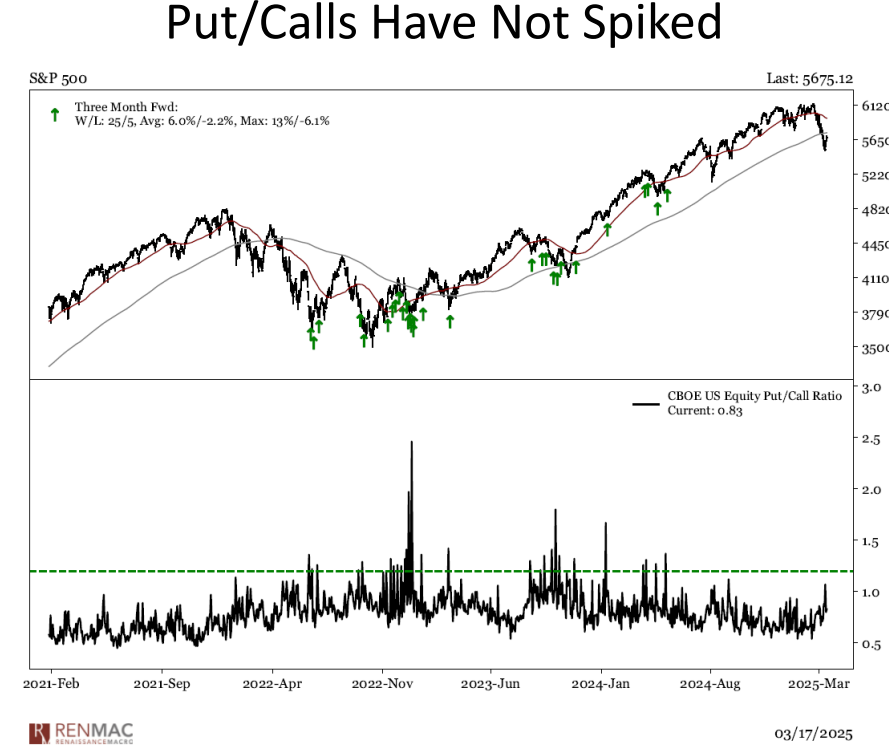
- The tape is very narrow with the percentage of issues above their 20-day moving average running at around 44%, very low given where the overall market is.
- The percentage of issues at 52-week highs is somewhere between 10-15% and 52-week lows greater than 10% of issues. Unusual to be happening while being right at new highs. Looking out 63 trading days (essentially a quarter), we find 59% of the time, the S&P is actually lower, but most of the time (62% of the time) you are higher after any given 3-month period.
- The US Generic 30-Year cleared 5.15% on Tuesday's close, taking out a level that had capped every probe since the spring of 2025. Our oscillator on the 30-year sits at 3.42 - overbought, yes, but the kind of overbought that often resolves with more upside before mean reversion dominates.
- Pulling the camera back to the 2000-present view, we are printing fresh cycle highs in long yields, and the trend that began at the COVID lows in 2020 remains the dominant feature on the tape.
- This is a real-rates story, not an inflation story, and it's where the current environment diverges from the 1970s playbook; it's most evident in materials and metals.
- XLB has rolled over, and its relative performance to R1K is breaking to fresh lows. Construction Materials have hit a RenMac Rank of 4 (poor) and are dually impacted by discretionary spend and material's association.
- Credit spreads are flashing that things are good, but it's missing something. Are BDCs the source of credit stress in 2026? A BDC is nothing more than an unregulated bank lending to levered PE firms, just without the depositors or the regulation.
- Stress is starting to hit. Goldman Sachs BDC non-accruals at 4.7% last quarter, anything above 3% is a warning sign. Default rates worsening. PE owners no longer injecting cash, dividend cuts starting to percolate. Gates would be DEFCON1 but that's the panic button.
- Credit cycle turn is now the base case. PE tends to lag private credit by about two quarters on the marks, and sure enough, PE peaked in early Q4 and has rolled over. Big top formation. Either way, it's a de facto tightening of financial conditions that needs to be respected.
- While the Fed frets, speculative money continues to search for a home. Quantum names are the latest repository for animal spirts with several up double digits Thursday after spectacular corrections post bubble signals in 3Q of 2025. Admittedly, some of these names have base characteristics and look like they can get hot again.
- In software the bifurcation continues with bad charts like INTU cracking lower in spectacular fashion while the group bounces out of the existential risk environment created by AI. We’re now at a point where bearish trends are seeing short-term positive momentum, a quantitative descriptor of an optimal exit in our work.
- Inflows on the IGV (software) ETF have reached excessive levels suggesting this is not a rally that has climbed a wall of worry, but one in which tech investors have started to barbell winners (semis) with losers (software).
- Oil down pushes airlines up, helps discretionary, compresses real-yields which in turn help financials, particularly banks who had 100% advancers on Wednesday.
- We’re not here to call balls and strikes, which is what news flows and negotiations create, we’re here to count base-runners, pitch-counts and the little things that determine ball games beyond the play-by-play.
- In our book, crude needs to break $80 before we can entertain a potentially durable decline, until then knee-jerk reactions are likely. Our strategy is to find things in durable trends that have been recently impaired by the news flow but structurally remain bullish. Regional banks are one area, Cargo names in transports and apparel retail in discretionary both fit the bill.
Economics
- AI capex headline GDP impact looks modest (~0.2% officially and 0.4% on a "true GDP" basis treating semis as final output) because so much leaks abroad through capital goods imports. That framing badly understates the footprint. The dollars don't vanish, they finance a real-economy boom in Asia and loop back to US corporate earnings through NVIDIA, AMD, Broadcom, and Micron.
- The wealth effect has effectively become an AI wealth effect. Real PCE is running more than 2x the pace of real disposable income, equities are at 42% of household financial assets (highest since 1945.... dot-com peak was 38%). 15 non-tech S&P 500 names worth ~2T now trade with semis at a 0.50+ correlation.
- State governments are getting a windfall that's invisible to investment-side accounting. California has pulled in an estimated $66B in more personal income since the start of 2024 than it would have at the pre-AI 2018-2019 pace. Many other states run the along the same lines. According to one estimate from California's Legislative Analyst's Office, 33% to 50% of the growth in the state's tax withholdings can be attributed to equity withholding, and we ran a model to find that for every 10% gain in equities, California gains 5.5% in taxes.
- The real question isn't GDP accounting, it's whether the capex delivers a return. Productivity has stalled in recent quarters, and it's historically unusual to see IT commodity prices rising while real incomes are falling in a supposed productivity boom.
- Markets are already pricing in a favorable productivity backdrop, which sets up an asymmetric risk if it doesn't show up.
- Waller wants to drop the easing bias language to signal a cut is no more likely than a hike, and made clear a weakening labor market isn't the dominant force guiding policy right now. Inflation own's the Fed's reaction function.
- Sell-side economists are momentum-trading the rates call (no cuts -> hikes -> maybe one or two), but there's no such thing as one or two hikes.
- The real distribution is 100bps of hikes, do nothing, or more cuts, so the path of least resistance is to assume nothing for the rest of the year.
- Mortgage purchase applications fell 4.1% for the week ending May 15, the 2nd decline in 3 weeks, with the level essentially flat since last summer. The 30Y fixed rate has also jumped, which likely cools purchase demand through the rest of the month.
- Global PMIs show slowing conditions, with services taking more of the hit than manufacturing.
- Eurozone composite fell 1.3pts to 47.5 (lowest since Oct 2023).Lengthening delivery times are pushing prices up, pulling the ECB in different directions, though for now it seems like they see a few hikes.
- The UK looks similar with services collapsing 4.8pts to 47.9 (lowest since 2021) while manufacturing held up - eurozone it was the opposite.
- Japan sees growth exclusively in manufacturing as well and output prices climbing to the highest level in history of the data set, notable given the focus on the yen and JGB market.
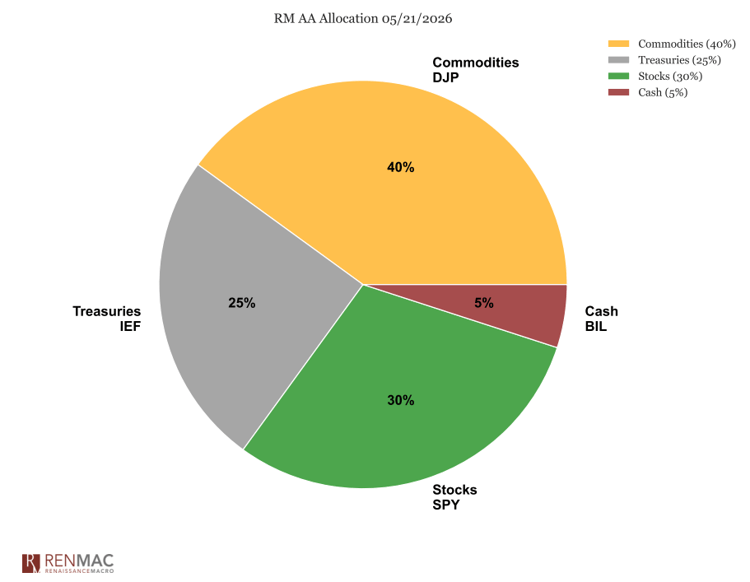
 Sector Ranks
 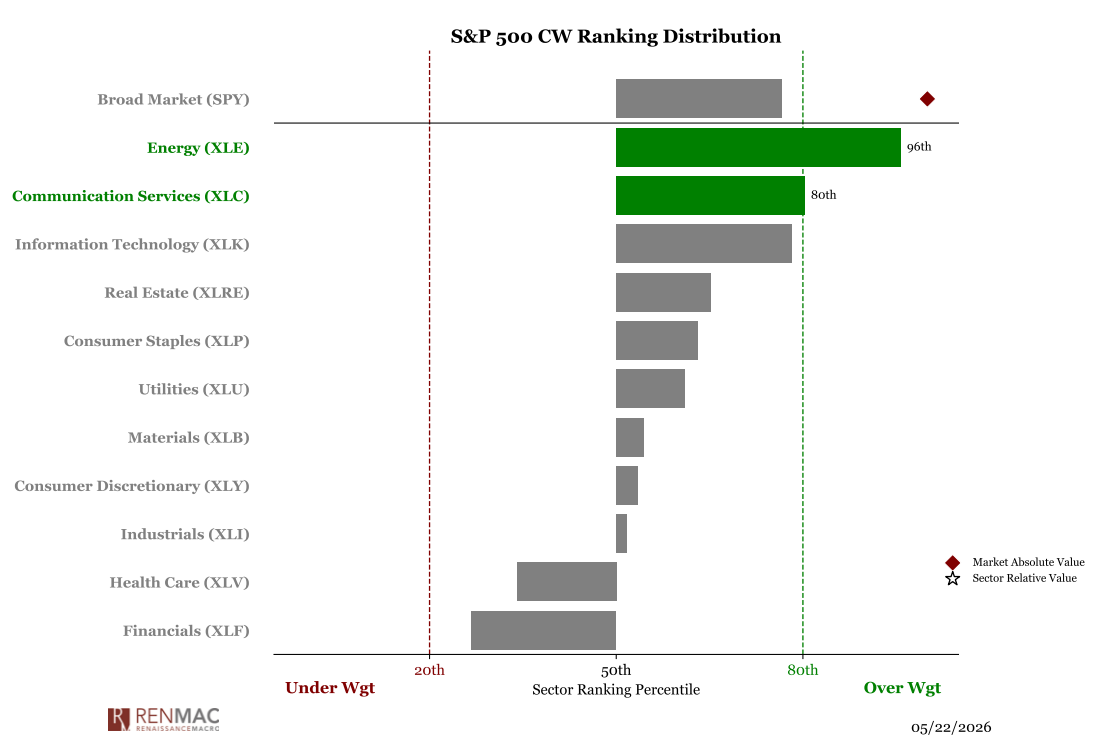 Chart of the weekHousing inflation has cooled to 2.98% YoY in March 2026, below the 2019 average of 3.15% for the first time this cycle and well below the 7.7% peak. Using market rent measures like Zillow that lead CPI housing by about 12 months, the model projects housing inflation runs in a 2.0-2.5% range over the next year, averaging around 2.2%, comfortably below the pre-pandemic norm.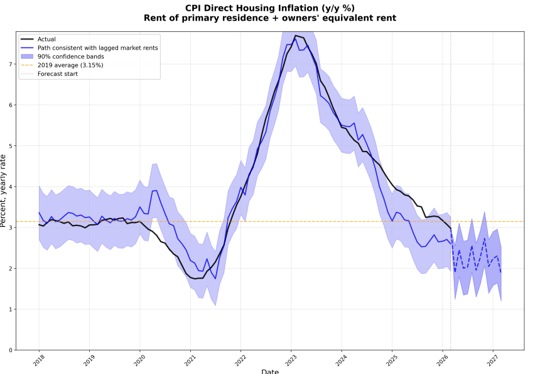
RenMac Off-Script Podcast

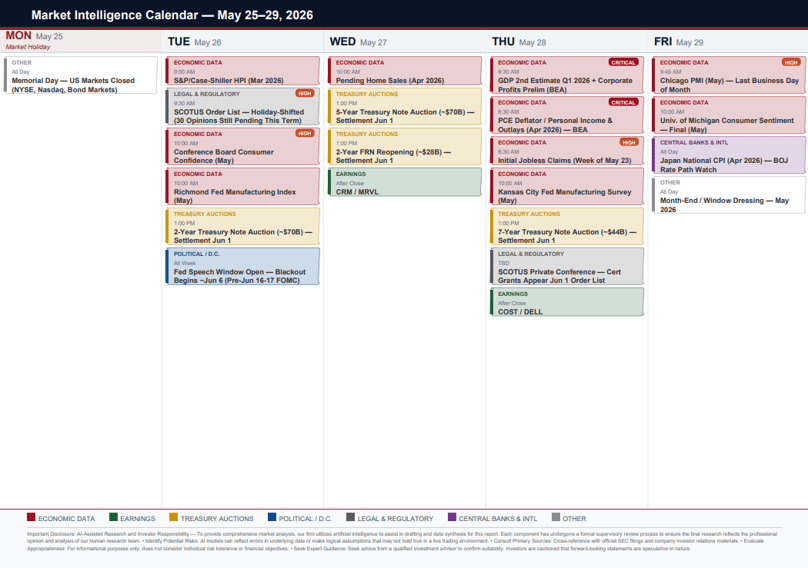
RenMac Calendar
Research Notes
Economics
- US labor market continues its downtrend. Weekly job postings continue to trend down, layoffs picking up, quits are cooling.
- March data showed broad economic weakness, with declines in services, confidence, housing, and commercial real estate.
- Rising inflation, weakening job outlooks, and cautious business spending point to growing economic strain.
- Home prices are cooling, which may curb spending as household wealth dips and the savings rate edges higher.
- The rebound in capital goods shipments looks fragile, with growth mostly tied to tech and broader investment plans weakening.
- New tariffs could cut 0.5% from GDP, strain trade ties, and raise car prices before production shifts take effect.
- Auto repossessions are at their highest since 2009, and tariffs may push buyers to the used market, keeping prices elevated.
- Despite trade tensions, signs of de-escalation and strong profits offer some cushion, with markets already pricing in much of the downside.
- Q4 growth was lifted by consumer and government spending, but with investment falling and key supports fading, a broader slowdown seems likely.
Strategy
- Market technicals show potential for a rebound. We think Mag7 approaches 50dma and potentially crosses through, getting to overbought, high beta stocks slowly recovering, and excessive outflows in IWM and SPY could fuel a tactical bounce.
- Remember, this was a beta-driven correction, not a momentum-driven one.
- Remember, this was a beta-driven correction, not a momentum-driven one.
- Bullish signals may re-emerge if a high percentage of stocks move about their 20dma and hit 20-day highs, suggesting a reassertion of the bull trend.
- Despite heightened policy uncertainty and a dark cross in tech, strong credit markets and sentiment tied to returns suggest the current pessimism may be overdone.
- Semi's continue to weaken, with even "good" ones coming under pressure.
- Staples pulled back at resistance levels, maintaining relative downtrend. Sharp unwind in beta and extreme underperformance suggests continued downward pressure.
- Transports reiterate bearish trend but flagging oversold and in "seller's frenzy". Expect short-term tactical bounce but fade the move.
Policy
- Debt limit deadline ("X-Date") likely between July and October, with resolution hinging on reconciliation or bipartisan deal amid uncertain cash flows.
- Delays risk market volatility and a Moody's downgrade, raising U.S. borrowing costs.
- Delays risk market volatility and a Moody's downgrade, raising U.S. borrowing costs.
- Trump will announce reciprocal tariffs on April 2, targeting about 15 key partners; recent moves on oil, autos, and threats to the EU and Canada may be strategic leverage.
- Section 232 is being used more broadly to justify tariffs on national security grounds, covering autos, copper, timber, and pharma, with an emphasis on U.S. production.
- Tariff timing and scope remain unclear, with Trump using them as a flexible tool, adding to market uncertainty.
Asset Allocation Model
 Sector Ranks
  Chart of the week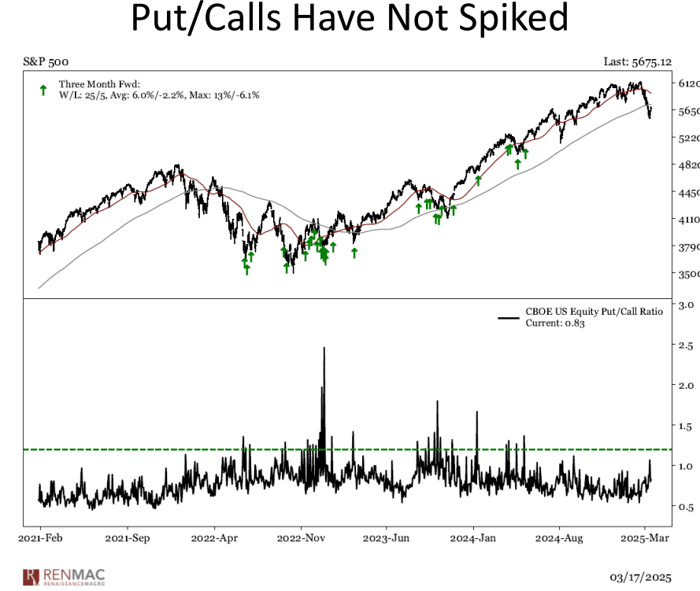
Sector Ranks Chart of the week