Research Notes
Strategy
- The S&P had it’s single best month since the COVID rebound in 2020.
- While impressive, it’s equally misleading as it speaks as much to the time to the start of a rally as it does the magnitude. Rallies that begin closer to the beginning of the month have a better chance of scoring highly in these measure than those that start in the middle of the month. It’s one of the reasons we’re not wrapped up in weekly or monthly candles because they are often determined by start and end dates, not pure performance.
- A better, more honest way to measure these types of moves is on a 21-day rolling basis which eliminates the importance of the start and end date and makes comparisons through time more appropriate.
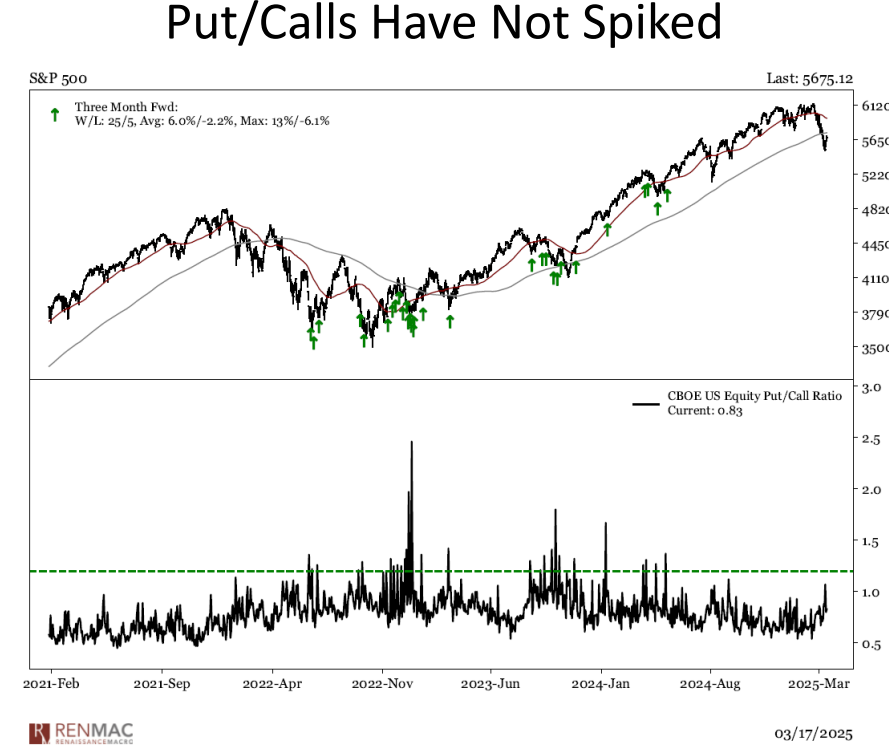
- The rebound has pushed sentiment back into neutral/elevated readings, but bulls are more prolific than we’d expect to see historically given the 13wk S&P returns.
- The Philadelphia Semiconductor Index is posting its 2nd best month on record, surpassed only by February of 2000, which occurred just weeks before the eventual dot-com bubble peak.
- The near 40% surge in April has helped push the index into our bubble indicator territory as it has now doubled over two years. This isn’t a sell signal for Semis but more of a caution flag.
- The AI growth story is well understood but it’s important to be aware of the historical returns and begin considering potential downside risks or what could go wrong. At this stage, we’d avoid being overly concentrated in the space.
- With crude back at $100 and gasoline futures at cycle highs, the Discretionary sector is struggling to outperform. On an equal-weight basis, the sector is slipping back to relative lows after a poor response to the recent overbought condition.
- Less than 40% of the components are trading above their 200-DMA’s and we’ve seen several industries flag as negative relative trend changes in our work over the past week.
- Despite new highs in the broad market, Discretionary is not signaling a strengthening consumer.
- One area of the market that has been quietly strengthening and where large basing patterns are starting to resolve higher is REITs.
- The fundamental driver isn’t entirely clear, but the technical setup is compelling. We would avoid chasing the overbought condition in Office REITs but focus longs on Health Care REITS, Industrial, Retail, Storage, Data Center and Hotel & Resorts. We would be increasing our exposure to the group especially on relative breakouts.
- Managed care names are in a downtrend and overbought, but the negative SERM readings are matching levels seen in 1999 and the late 1980s.
- Changes in relative trends provide the trigger event and we haven’t seen that yet. Ideally, we’d like to see weakness out of the overbought condition hold above the recent lows, build bases and then start to see relative trends and upside momentum develop. That would provide a long runway for these names to perform.
- Changes in relative trends provide the trigger event and we haven’t seen that yet. Ideally, we’d like to see weakness out of the overbought condition hold above the recent lows, build bases and then start to see relative trends and upside momentum develop. That would provide a long runway for these names to perform.
Economics
- The power of the FOMC Chair is the power of persuasion. It is clear that Warsh has his work cut out for him convincing the committee to adopt his policy views.
- The bar to raising rates this year has just come down. These folks started with a down payment of changing the statement, not voting for a hike. For Warsh, it might be a waiting game. He might find a more receptive audience among the regional Fed Presidents next year.
- Q1 growth was decent at 2.0%, but the mix is weak. Consumer spending was soft, housing and structures declined, and most of the strength came from tech-related investment.
- Looking ahead, income growth is slowing while inflation stays firm, pointing to continued pressure on real incomes and the consumer. Outside of tech, growth remains narrow and uneven.
- Initial claims dropped sharply to 189k, the lowest in decades, though some of the decline looks seasonal, tied to spring break effects in states like New York.
- Continuing claims also fell to a two-year low, pointing to a labor market that remains tight, with little sign of rising layoffs at this stage.
- Single-family starts surged in March and have been strong over the past six months, but some of that strength likely reflects weather-related distortions. That makes the recent pace look a bit overstated and raises the odds of a slowdown in Q2.
- The more stable signs are weaker. Permits are not keeping up with starts and builder sentiment has deteriorated to its lowest level in months. If builders are not confident, it's hard to see this level of construction activity being sustained.
- Euro area inflation expectations moved higher across the curve, with near-term expectations jumping sharply. That is raising concerns for the ECB and pushing market pricing toward additional rate hikes.
- That said, expectations data can be noisy. The ECB will likely wait to see if this feeds into actual wages and prices, especially with credit conditions tightening, which should act as a restraint on growth.
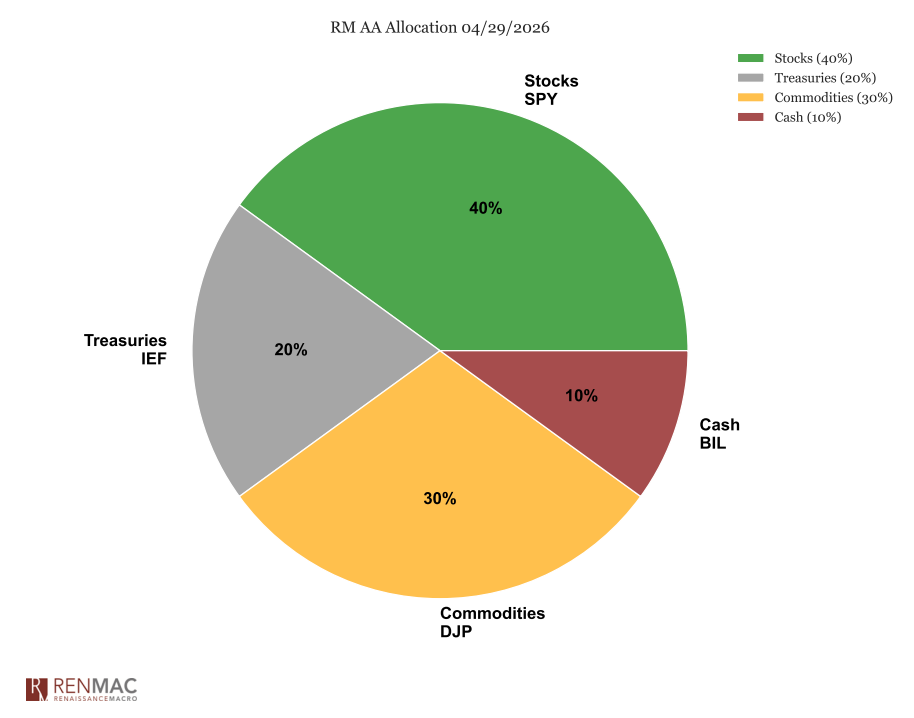
 Sector Ranks
 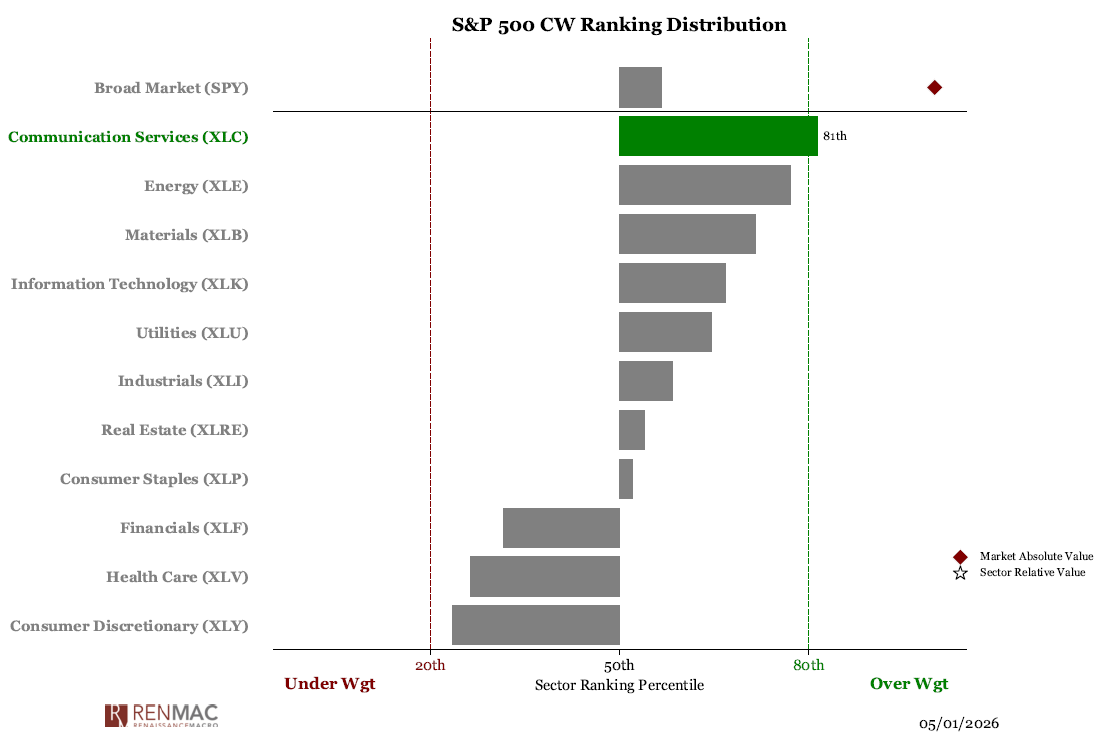 Chart of the weekWe updated our market cycle clock Friday, with notable deterioration in the inflation reading. Not a big surprise given the prolonged conflict in Iran and the disruption to the flow of oil. Importantly, the year-end Brent implies +$87 oil in December, up +10% from a month ago (when market was bottoming), and +26% from end of February. On this week's "Off-script", Jeff and Neil talked about how short-rates and oil (two important SPX drivers) have been moving against equities in the near-term, yet new highs persist. The bottom line is the conditional factors are in historically unfavorable set-ups, but the Cap-Ex boom in AI continues to dominate the tape. We're dancing (not well), but are also staying in close proximity to the door.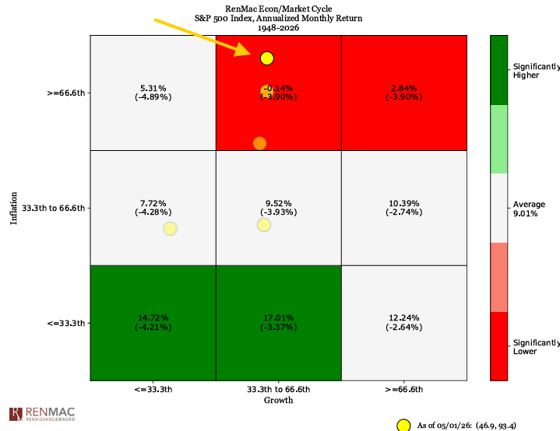
RenMac Off-Script Podcast
.png?width=717&height=403&name=01-16-26%20RenMac%20-%202%20(5).png)
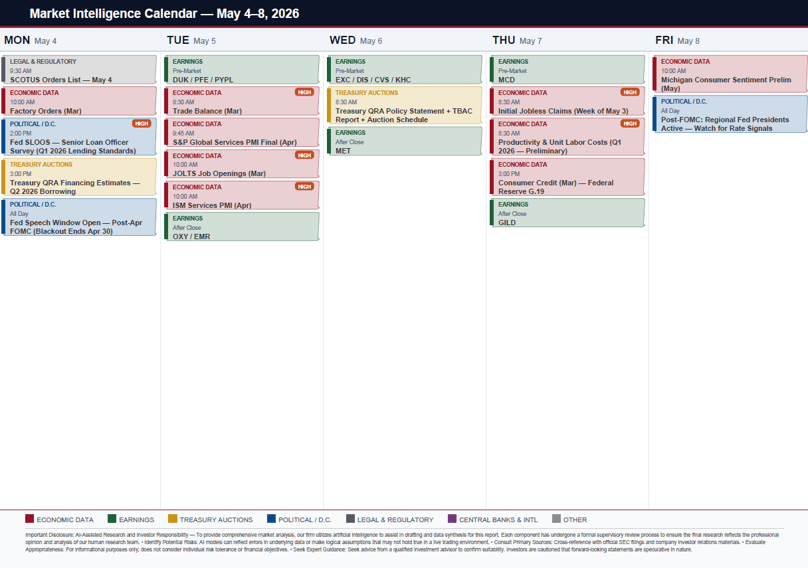
RenMac Calendar
Research Notes
Economics
- US labor market continues its downtrend. Weekly job postings continue to trend down, layoffs picking up, quits are cooling.
- March data showed broad economic weakness, with declines in services, confidence, housing, and commercial real estate.
- Rising inflation, weakening job outlooks, and cautious business spending point to growing economic strain.
- Home prices are cooling, which may curb spending as household wealth dips and the savings rate edges higher.
- The rebound in capital goods shipments looks fragile, with growth mostly tied to tech and broader investment plans weakening.
- New tariffs could cut 0.5% from GDP, strain trade ties, and raise car prices before production shifts take effect.
- Auto repossessions are at their highest since 2009, and tariffs may push buyers to the used market, keeping prices elevated.
- Despite trade tensions, signs of de-escalation and strong profits offer some cushion, with markets already pricing in much of the downside.
- Q4 growth was lifted by consumer and government spending, but with investment falling and key supports fading, a broader slowdown seems likely.
Strategy
- Market technicals show potential for a rebound. We think Mag7 approaches 50dma and potentially crosses through, getting to overbought, high beta stocks slowly recovering, and excessive outflows in IWM and SPY could fuel a tactical bounce.
- Remember, this was a beta-driven correction, not a momentum-driven one.
- Remember, this was a beta-driven correction, not a momentum-driven one.
- Bullish signals may re-emerge if a high percentage of stocks move about their 20dma and hit 20-day highs, suggesting a reassertion of the bull trend.
- Despite heightened policy uncertainty and a dark cross in tech, strong credit markets and sentiment tied to returns suggest the current pessimism may be overdone.
- Semi's continue to weaken, with even "good" ones coming under pressure.
- Staples pulled back at resistance levels, maintaining relative downtrend. Sharp unwind in beta and extreme underperformance suggests continued downward pressure.
- Transports reiterate bearish trend but flagging oversold and in "seller's frenzy". Expect short-term tactical bounce but fade the move.
Policy
- Debt limit deadline ("X-Date") likely between July and October, with resolution hinging on reconciliation or bipartisan deal amid uncertain cash flows.
- Delays risk market volatility and a Moody's downgrade, raising U.S. borrowing costs.
- Delays risk market volatility and a Moody's downgrade, raising U.S. borrowing costs.
- Trump will announce reciprocal tariffs on April 2, targeting about 15 key partners; recent moves on oil, autos, and threats to the EU and Canada may be strategic leverage.
- Section 232 is being used more broadly to justify tariffs on national security grounds, covering autos, copper, timber, and pharma, with an emphasis on U.S. production.
- Tariff timing and scope remain unclear, with Trump using them as a flexible tool, adding to market uncertainty.
Asset Allocation Model
 Sector Ranks
  Chart of the week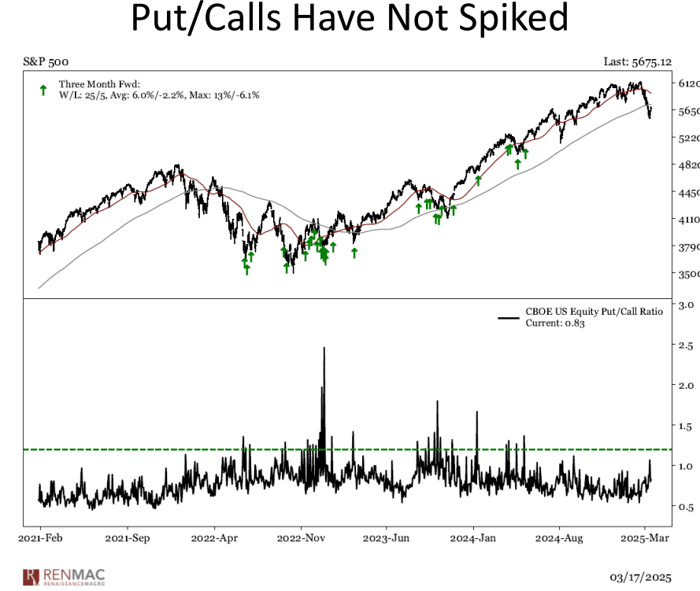
Sector Ranks Chart of the week