Research Notes
Strategy
- Advances don't always announce themselves with momentum, and Thursday's was the quiet type.
- The EW S&P closed at a new high, the R3K cumulative breadth line bent back up through its average, and small-caps and value both cleared ranges that had held for the better part of a year.
- Barely 1/3 of issues registered a 20-day high, but it too is one of the firmer readings in months.
- Crude reached an oversold condition on Wednesday which gets us interested but is not yet a full-throated endorsement.
- 20-day lows in energy are confirming the oversold state, but ETF flows have not yet cleansed the headline chasers of last quarter’s U.S./Iran conflict. When that happens, we’ll lean in, for now we’re giving the implicit nod to add at your leisure, not urgency.
- The crack in crude is doing what cheap oil does: Airlines broke to a new high with relative strength confirmation while Discretionary firmed.
- The oil story helps inflation expectations, but it is not doing much for real-yields which are reflecting Warsh’s FOMC comments and the Dots (i.e. higher for sooner and potentially longer).
- Gold is the cleanest casualty, and this break lower is likely to help wash the GLD ETF flows into an excessive state. When Volcker turned real rates positive in 1980-82, the metal shed 2/3rds of its value. A zero-coupon store of value has no answer for a positive real rate.
- Speaking of zero, Bitcoin sits on the verge of a new low as MicroStrategy already made one. Levered, long-duration speculation can’t hold its weight against the gravity of higher real-yields.
- SPCX has come back down to Earth and is now roughly in line with it's first trade price. The weakness puts SPCX more in-line with our “Hype-Tax” report from two weeks ago, which highlighted that the average and median returns over the first month are negative for the most hyped IPOs over the past 30 years.
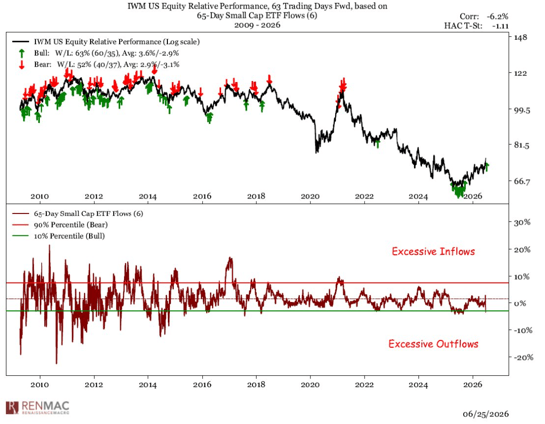
- The AI trade’s engines are also throttling back as the KOSPI had one of its worst days on record Tuesday which should serve as an important reminder to not be complacent and be sure to raise stops in parabolic AI winners. Health Care and Financials continue to absorb money exiting the AI trade which is also driving outperformance in small-caps. We think there is still room in that rotation.
Economics
- Q1 GDP was revised higher, but the upgrade was driven by inventories and net exports, while private domestic demand and consumer spending were revised lower, pointing to softer underlying growth.
- Consumer spending remains sluggish, with real PCE tracking around 2% in Q2. Spending has been supported by a declining savings rate, which could reverse into a headwind as households rebuild savings in the second half of the year.
- Income growth has improved in May, but weak restaurant spending and signs of margin pressure suggest services demand remains soft despite stronger employment.
- Core PCE inflation came in slightly below expectations, and easing oil and food prices should help moderate inflation. However, elevated core services inflation remains the key risk the Fed is watching.
- Some notes from Bessent at the ECNY Tuesday night...
- He argued that economic security requires rebuilding domestic production in strategic industries while pursuing reciprocal trade policies that strengthen U.S. competitiveness.
- He emphasized that the U.S. should lead the next generation of global commerce through secure, marked-based standards, including support for digital assets and stablecoins that reinforce the dollar.
- On the Fed, Bessent appeared comfortable with further rate hikes if needed, stressing the importance of anchoring the bond market while emphasizing Fed independence under Chair Kevin Warsh.
- He called for continued banking deregulation to boost traditional lending, while warning that private credit may be less effective during economic downturns.
- He argued a strong dollar is compatible with a strong manufacturing sector, and markets responded positively to his broader pro-growth message, with stocks and the dollar rising while bond yields fell.
- Chairman Warsh defended removing forward guidance, arguing markets should react to incoming data rather than anticipate the Fed's response. However, markets still need a clear framework for how policymakers interpret economic data and make decisions.
- While eliminating forward guidance gives the Fed greater flexibility, it also risks increasing market volatility if investors lack clarity on the Fed's reaction function.
- The June S&P Global Composite PMI rose to its highest level since January, but still points to modest economic growth of roughly 2% rather than a meaningful acceleration.
- Manufacturing strengthened on solid new orders, though much of the improvement appears driven by inventory stockpiling ahead of potential supply disruptions rather than underlying demand.
- Services activity remained subdued, with weak employment and soft consumer demand suggesting the broader economy continues to expand at a modest pace.
- New home sales fell 7.3% to their lowest level since January, missing expectations and signaling continued weakness in the housing market.
- The decline was concentrated in the South and West, with YTD sales down 6.4% versus last year, pointing to softer single-family residential construction ahead.
- Completed home inventories remain elevated but have stabilized over the past year, suggesting excess supply is no longer worsening.
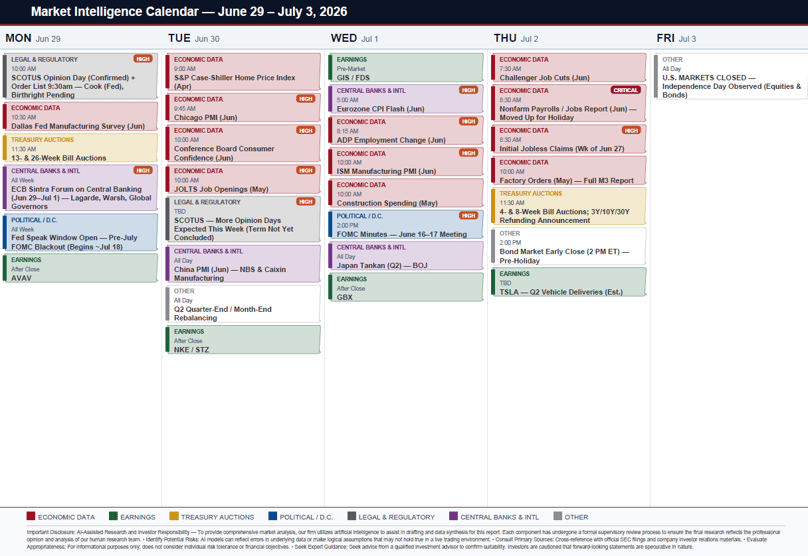
-3.png?width=717&height=403&name=01-16-26%20RenMac%20-%202%20(1)-3.png)
Research Notes
Economics
- US labor market continues its downtrend. Weekly job postings continue to trend down, layoffs picking up, quits are cooling.
- March data showed broad economic weakness, with declines in services, confidence, housing, and commercial real estate.
- Rising inflation, weakening job outlooks, and cautious business spending point to growing economic strain.
- Home prices are cooling, which may curb spending as household wealth dips and the savings rate edges higher.
- The rebound in capital goods shipments looks fragile, with growth mostly tied to tech and broader investment plans weakening.
- New tariffs could cut 0.5% from GDP, strain trade ties, and raise car prices before production shifts take effect.
- Auto repossessions are at their highest since 2009, and tariffs may push buyers to the used market, keeping prices elevated.
- Despite trade tensions, signs of de-escalation and strong profits offer some cushion, with markets already pricing in much of the downside.
- Q4 growth was lifted by consumer and government spending, but with investment falling and key supports fading, a broader slowdown seems likely.
Strategy
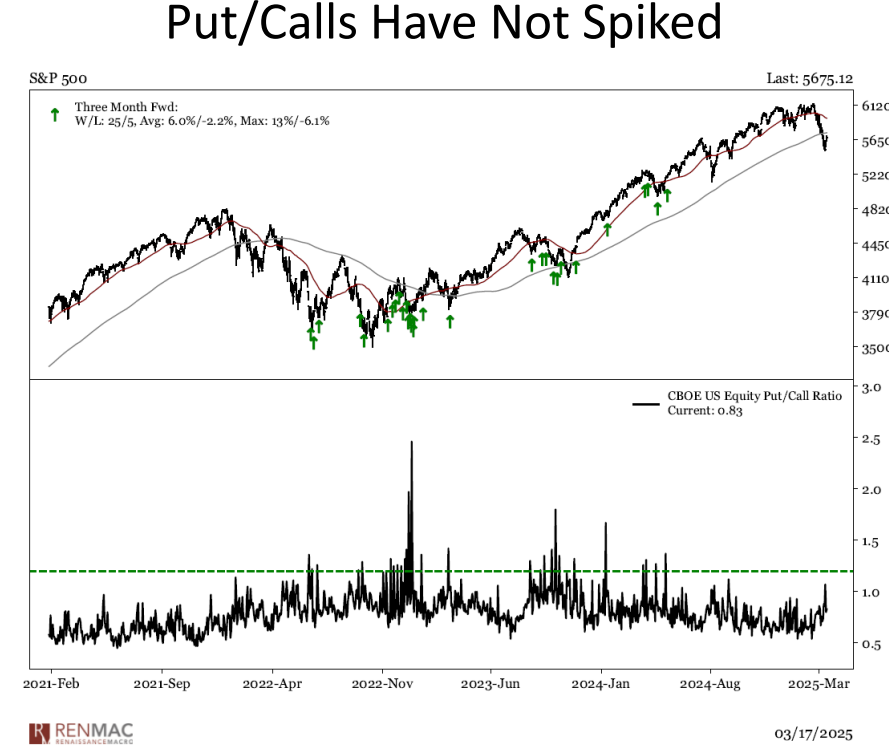
- Market technicals show potential for a rebound. We think Mag7 approaches 50dma and potentially crosses through, getting to overbought, high beta stocks slowly recovering, and excessive outflows in IWM and SPY could fuel a tactical bounce.
- Remember, this was a beta-driven correction, not a momentum-driven one.
- Remember, this was a beta-driven correction, not a momentum-driven one.
- Bullish signals may re-emerge if a high percentage of stocks move about their 20dma and hit 20-day highs, suggesting a reassertion of the bull trend.
- Despite heightened policy uncertainty and a dark cross in tech, strong credit markets and sentiment tied to returns suggest the current pessimism may be overdone.
- Semi's continue to weaken, with even "good" ones coming under pressure.
- Staples pulled back at resistance levels, maintaining relative downtrend. Sharp unwind in beta and extreme underperformance suggests continued downward pressure.
- Transports reiterate bearish trend but flagging oversold and in "seller's frenzy". Expect short-term tactical bounce but fade the move.
Policy
- Debt limit deadline ("X-Date") likely between July and October, with resolution hinging on reconciliation or bipartisan deal amid uncertain cash flows.
- Delays risk market volatility and a Moody's downgrade, raising U.S. borrowing costs.
- Delays risk market volatility and a Moody's downgrade, raising U.S. borrowing costs.
- Trump will announce reciprocal tariffs on April 2, targeting about 15 key partners; recent moves on oil, autos, and threats to the EU and Canada may be strategic leverage.
- Section 232 is being used more broadly to justify tariffs on national security grounds, covering autos, copper, timber, and pharma, with an emphasis on U.S. production.
- Tariff timing and scope remain unclear, with Trump using them as a flexible tool, adding to market uncertainty.
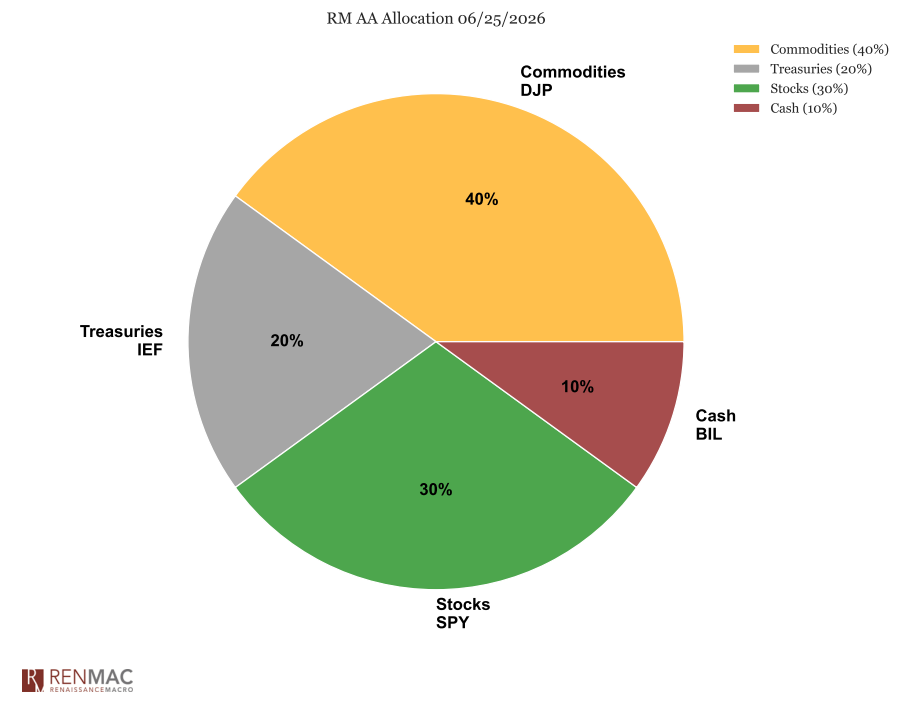
Asset Allocation Model
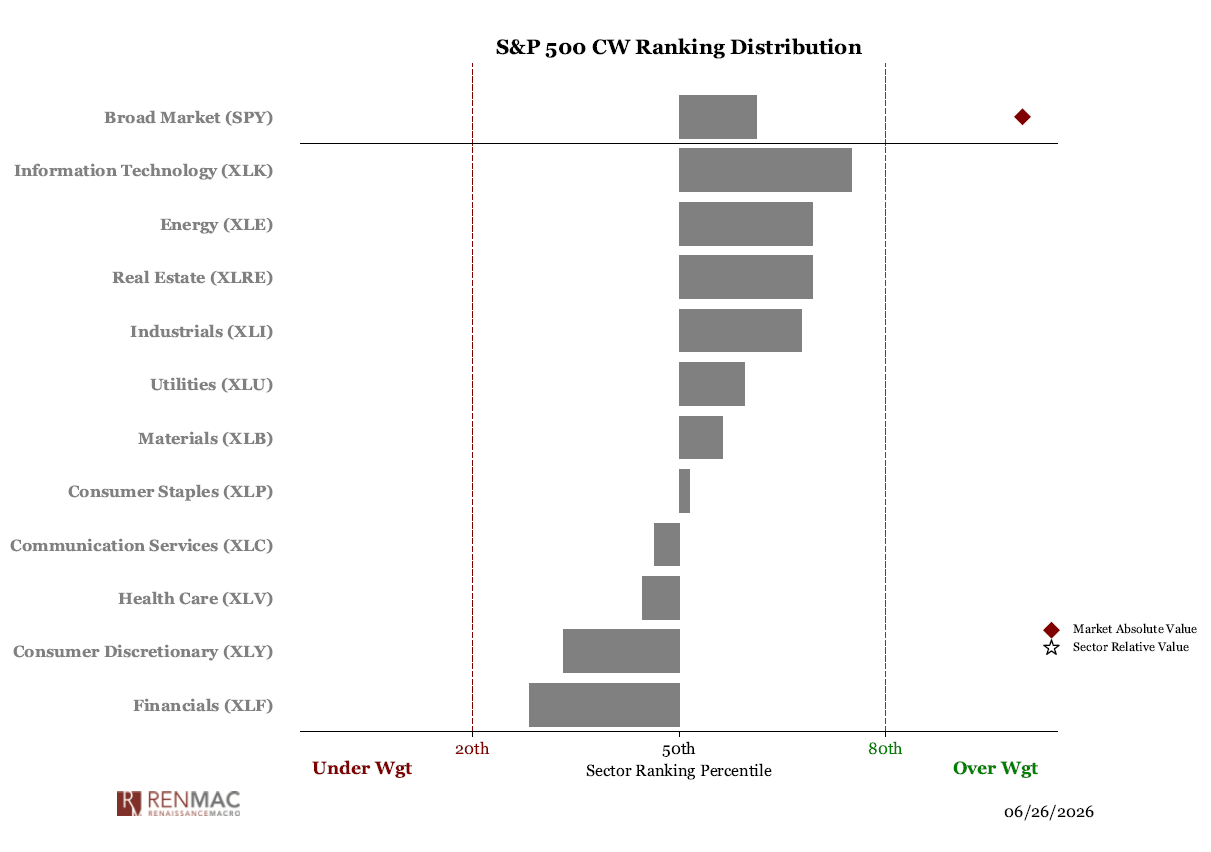
 Sector Ranks
  Chart of the week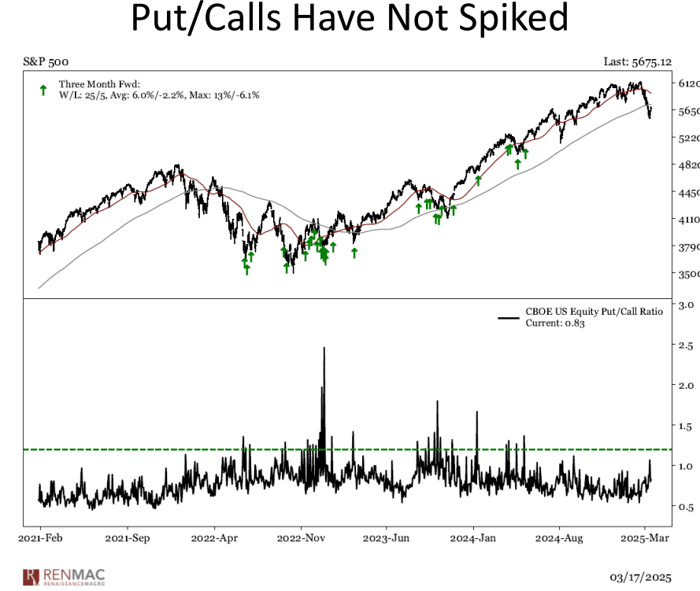
Sector Ranks Chart of the week