Research Notes
Strategy
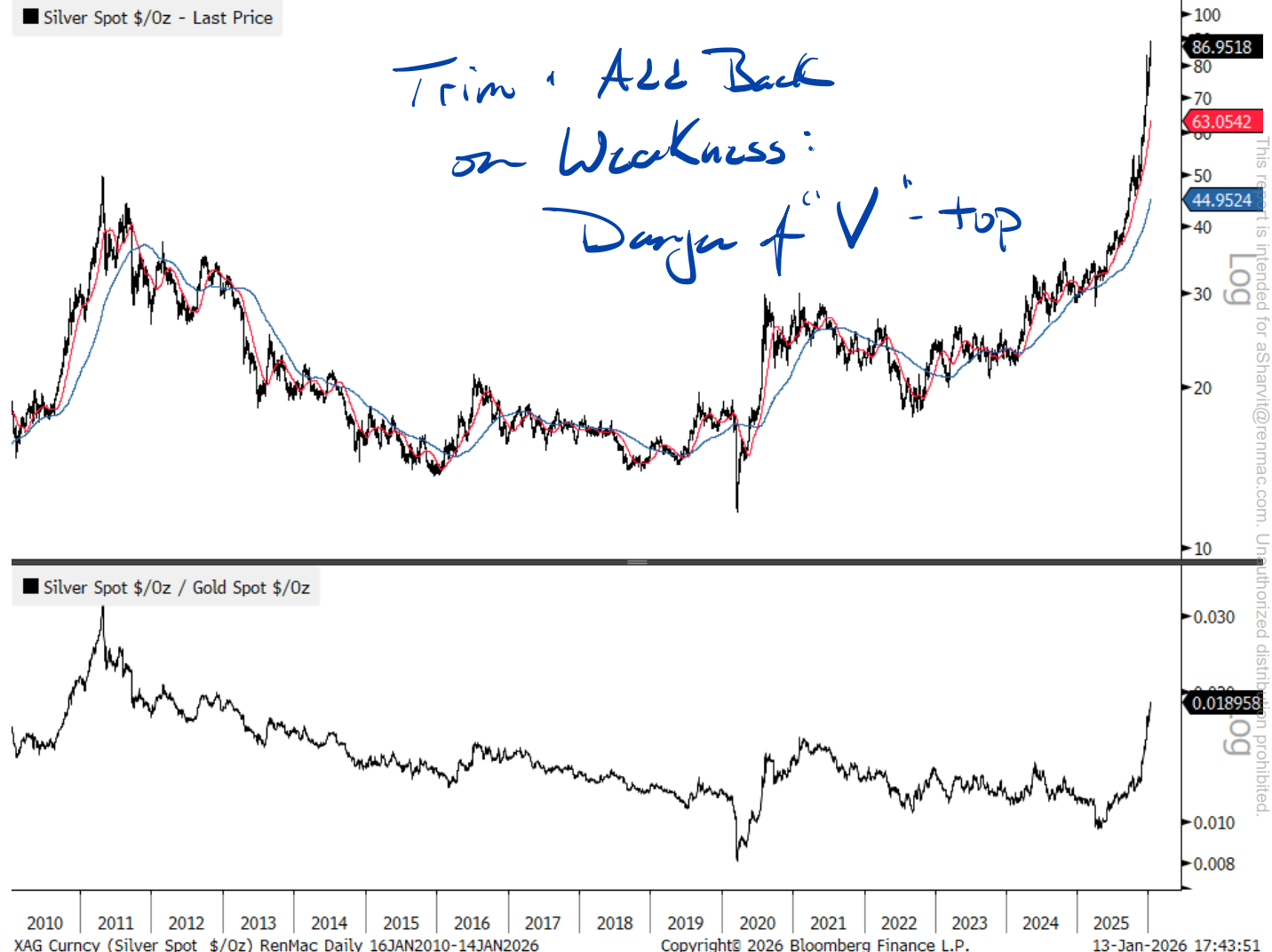
- Silver is parabolic and prone to “V-tops”. Trends are good if you own it, but they are unsustainable.
- We recommend trimming 20-50% positions and look for oversold conditions to develop to play from a position of strength. The timing and pricing are inexact, but the probability of 50% declines over the next 3-6 months are dramatically higher after such events than in normal trends.
- The Russell 2000 continues to impress as it’s now up roughly 7% to start the year and is breaking out to new 52-week relative highs vs the Russell 1000 on a cap-weighted basis.
- Strength in small-cap Health
Care and Financials with deterioration in large-cap Tech and Comm. Services is the perfect recipe for Russell 2000 outperformance and we think that rotation still has legs. Small-caps are positioning for a dominant year.
- Strength in small-cap Health
- Consumer discretionary is shaping up favorably, even though the charts haven’t fully confirmed it yet.
- Click here for a short video from deGraaf explaining where we are.
- Click here for a short video from deGraaf explaining where we are.
- Bitcoin is now overbought and challenging the first level of resistance around $98k. The bounce could push higher to the declining 200-DMA but we wouldn’t get greedy as we don’t think the cycle lows are in. If playing for the bounce, we would keep stops tight.
- Homebuilders turned bullish for us about a month ago. It was an uncomfortable call, and remains questionable, though supported by our market cycle clock.
Economics
- Labor productivity growth has been quite robust in recent quarters, sparking many to conclude we are in a strong boom. Neil highlights a few points:
- Productivity has ebbed and flowed since the pandemic. There was a strong boom early, followed by a decline. It has now been recovering since 2023, but remains in-line (or modestly above) the pre-pandemic trend.
- In a genuine boom, real compensation growth should be expanding. Typically, with better labor productivity comes an increase in real compensation, but the current administration is well below trendline.
- There is no evidence that compensation growth is about to catch up to productivity. Average hourly earnings for production and non-supervisory workers has climbed just 3.1% SAAR over the last 3 months. The series tends to be more representative and has a strong contemporaneous relationship with the Employment Cost Index.
- The dynamic continuing depends on whether household savings continues to be drawn down. Companies cannot indefinitely expand margins by squeezing labor.
- Institutional Investors are not a major driver of housing unaffordability, owning less than 1% of U.S. single-family homes nationally and just 2.6% even in the most concentrated state, according to recent AEI research.
- Housing affordability problems long predate institutional buying, with price-to-income ratios exceeding sustainable levels in major markets like California and New York as far back as the 1990s, well before large investors entered the market.
- The primary constraint on affordability is limited housing supply driven by restrictive zoning, slow permitting, and land-use regulations; AEI argues that reforms enabling by-right zoning and faster approvals would have a larger impact than restricting institutional ownership.
- As a result, proposals to limit institutional investors are unlikely to materially improve affordability, as they target a marginal part of the housing market rather than the supply shortage.
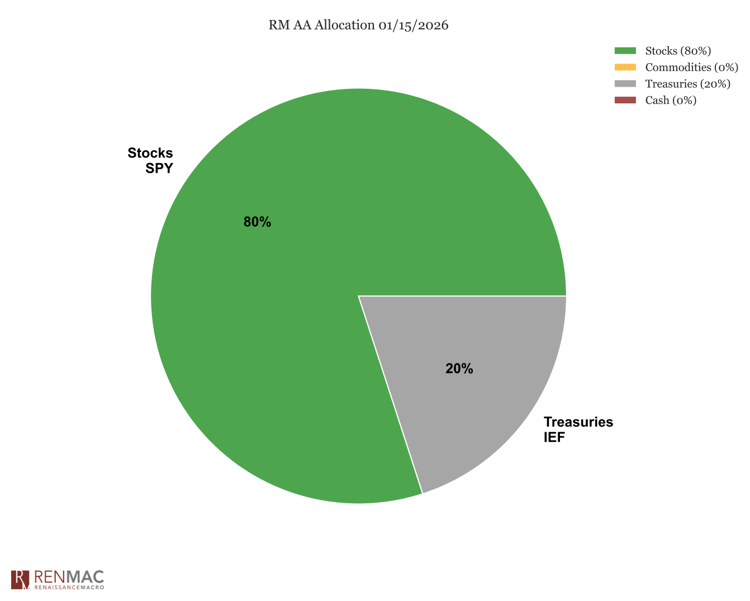
Asset Allocation Model
 Sector Ranks
 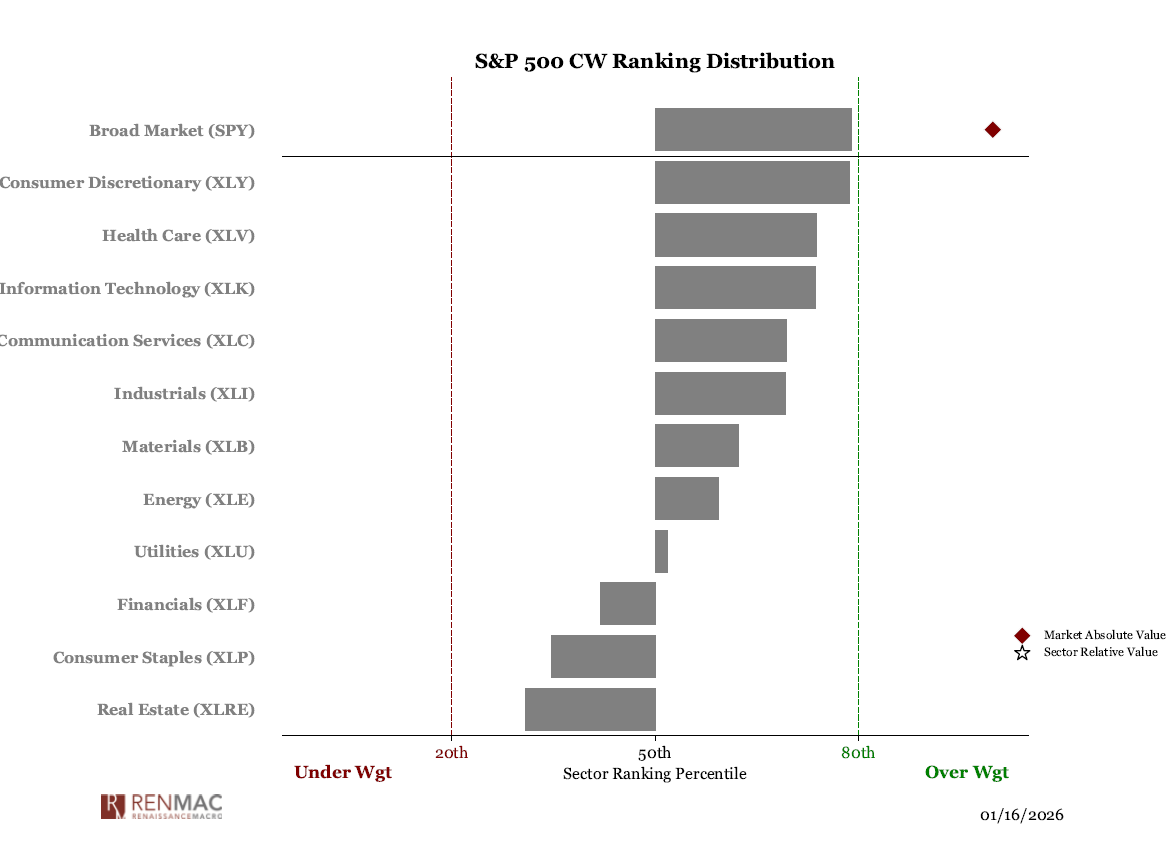 Chart of the weekWe have been and continue to be China bulls. $BABA appears to be reaccelerating as a text-book consolidation appears to be coming to an end.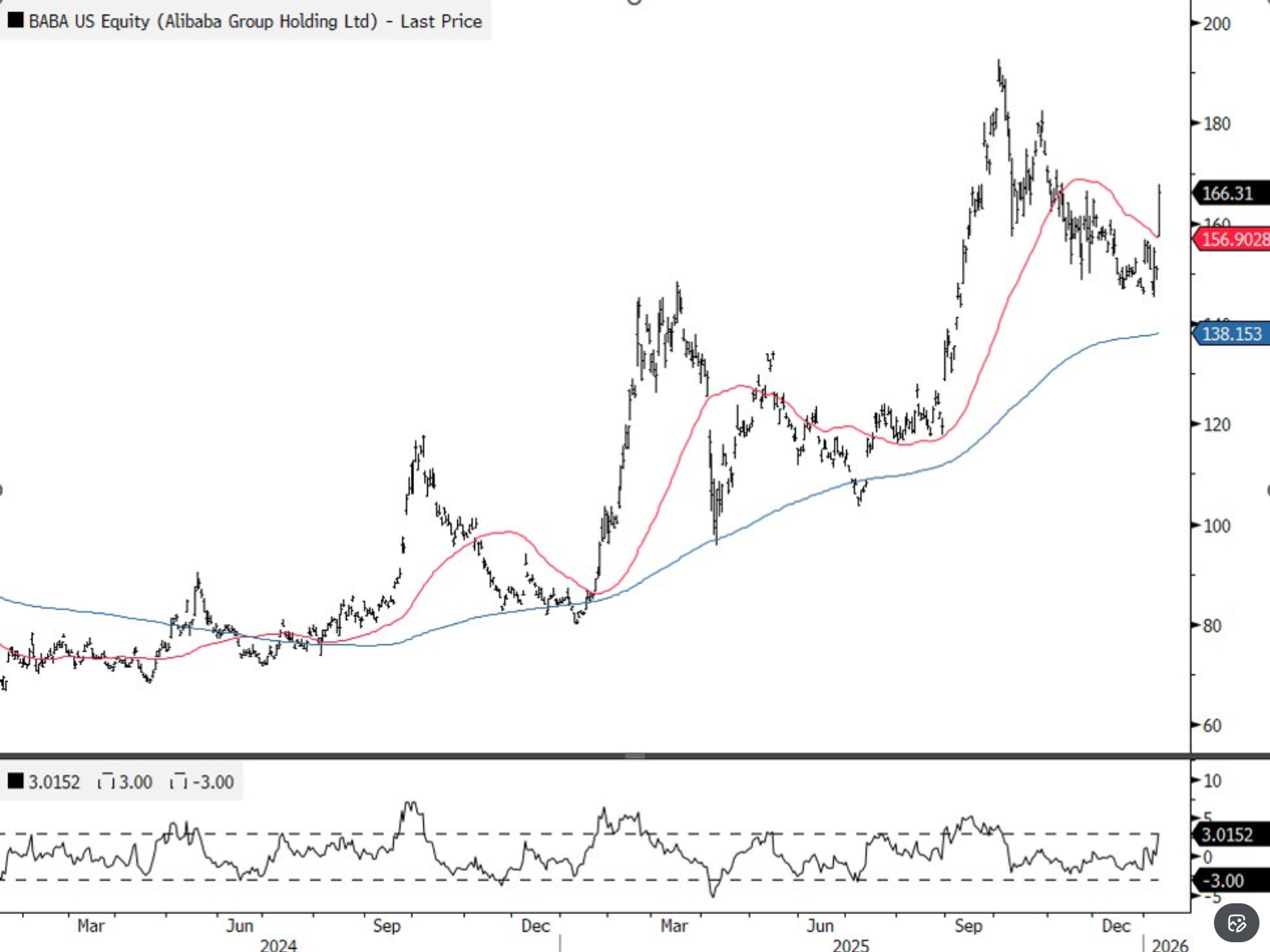
RenMac Off-Script Podcast

Research Notes
Economics
- US labor market continues its downtrend. Weekly job postings continue to trend down, layoffs picking up, quits are cooling.
- March data showed broad economic weakness, with declines in services, confidence, housing, and commercial real estate.
- Rising inflation, weakening job outlooks, and cautious business spending point to growing economic strain.
- Home prices are cooling, which may curb spending as household wealth dips and the savings rate edges higher.
- The rebound in capital goods shipments looks fragile, with growth mostly tied to tech and broader investment plans weakening.
- New tariffs could cut 0.5% from GDP, strain trade ties, and raise car prices before production shifts take effect.
- Auto repossessions are at their highest since 2009, and tariffs may push buyers to the used market, keeping prices elevated.
- Despite trade tensions, signs of de-escalation and strong profits offer some cushion, with markets already pricing in much of the downside.
- Q4 growth was lifted by consumer and government spending, but with investment falling and key supports fading, a broader slowdown seems likely.
Strategy
- Market technicals show potential for a rebound. We think Mag7 approaches 50dma and potentially crosses through, getting to overbought, high beta stocks slowly recovering, and excessive outflows in IWM and SPY could fuel a tactical bounce.
- Remember, this was a beta-driven correction, not a momentum-driven one.
- Remember, this was a beta-driven correction, not a momentum-driven one.
- Bullish signals may re-emerge if a high percentage of stocks move about their 20dma and hit 20-day highs, suggesting a reassertion of the bull trend.
- Despite heightened policy uncertainty and a dark cross in tech, strong credit markets and sentiment tied to returns suggest the current pessimism may be overdone.
- Semi's continue to weaken, with even "good" ones coming under pressure.
- Staples pulled back at resistance levels, maintaining relative downtrend. Sharp unwind in beta and extreme underperformance suggests continued downward pressure.
- Transports reiterate bearish trend but flagging oversold and in "seller's frenzy". Expect short-term tactical bounce but fade the move.
Policy
- Debt limit deadline ("X-Date") likely between July and October, with resolution hinging on reconciliation or bipartisan deal amid uncertain cash flows.
- Delays risk market volatility and a Moody's downgrade, raising U.S. borrowing costs.
- Delays risk market volatility and a Moody's downgrade, raising U.S. borrowing costs.
- Trump will announce reciprocal tariffs on April 2, targeting about 15 key partners; recent moves on oil, autos, and threats to the EU and Canada may be strategic leverage.
- Section 232 is being used more broadly to justify tariffs on national security grounds, covering autos, copper, timber, and pharma, with an emphasis on U.S. production.
- Tariff timing and scope remain unclear, with Trump using them as a flexible tool, adding to market uncertainty.
Asset Allocation Model
 Sector Ranks
  Chart of the week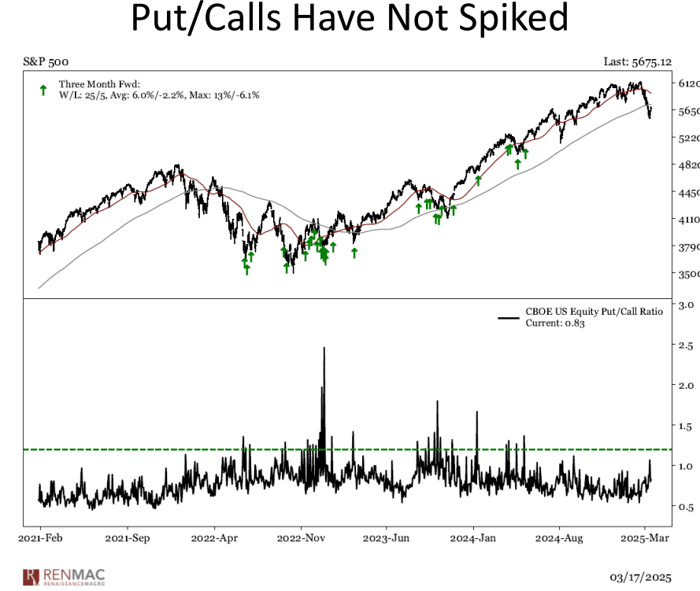
Sector Ranks Chart of the week