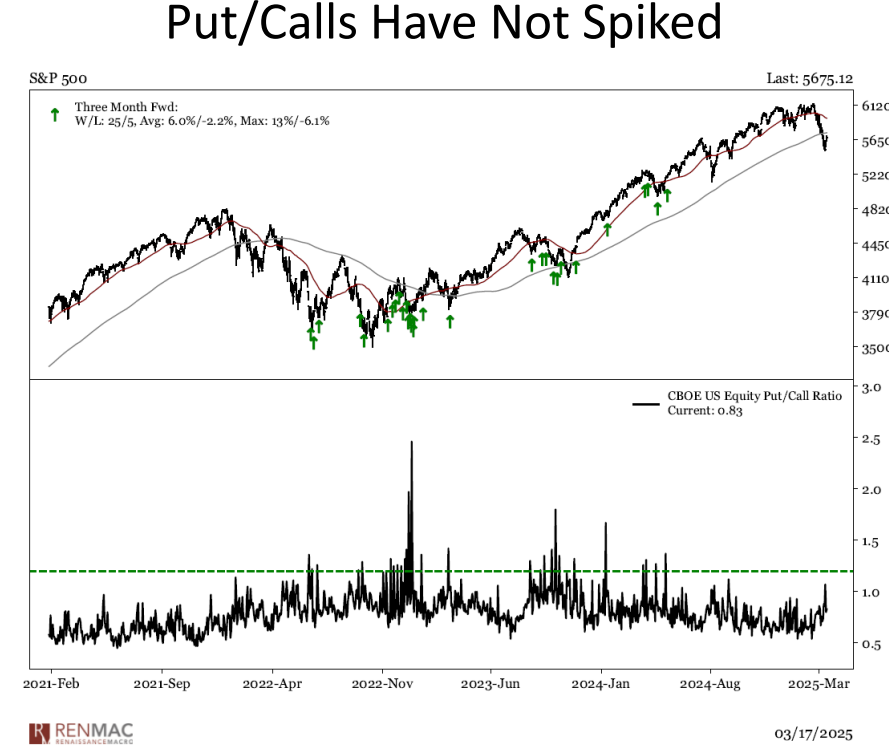
Research Notes
Strategy
- On Tuesday, the Philadelphia Semiconductor Index fell 4.98%, with all 30 constituents lower, memory and optical at the epicenter.
- Four months past our late-April semiconductor bubble signal, sentiment across the equipment and component names is back at excess enthusiasm and September is the only month with a statistically significant negative averages in the semis seasonal back to 1979. This is "shoot 'em in the back" territory.
- Names with declining 50-DMA, under-performing since the Leopold liquidation, they're running away and we're emptying the clip.
- Four months past our late-April semiconductor bubble signal, sentiment across the equipment and component names is back at excess enthusiasm and September is the only month with a statistically significant negative averages in the semis seasonal back to 1979. This is "shoot 'em in the back" territory.
- While momentum looks vulnerable, it's important to distinguish between fully endorsed momentum and skeptical momentum.
- The XLE closed at a new high Thursday. The relative line is the tell back above its 200-day, still well shy of its Q1 peak, while ETF flows remain close to new-outflow extremes.
- The XLE closed at a new high Thursday. The relative line is the tell back above its 200-day, still well shy of its Q1 peak, while ETF flows remain close to new-outflow extremes.
- The Treasury doubled the ceiling on liquidity-support buybacks of 10 to 30 year paper to at least $4B an operation. The 30Y traded down from 5.337% to 5.187% Wednesday, but with our oscillator at -0.29, nothing has been relieved technically, the level has merely been sponsored.
- Gold and silver rallied hard, with half the gold miners flashing positive volatility alerts. The EW gold complex has turned bullish-improving, close to resuming the relative trend it surrendered in the Spring.
- Bitcoin is now overbought, bought with $1.4B of liquidated shorts.. It remains roughly 45% below its October high, with $83k still overhead. A squeeze is not a trend, don't buy their hype.
- Multi-year highs in long-term bond yields remain a key risk, particularly for higher-duration momentum assets.
- Credit spreads remain healthy and continue to support the bullish case, but a decisive widening would be a clear signal to de-risk.
- With volatility looking underpriced, the cycle clock in a historically challenging zone, and weaker seasonality ahead, cheap portfolio hedges look increasingly attractive.
- See this video from Jeff deGraaf for more.
- A 53-year high in capex intentions raises the obvious question: who funds it, at what price? Credit has been answering all summer, and the answer keeps getting more expensive.
- 5-year protection on both NVDA and ORCL made new highs Thursday.
- Equal-weight semiconductor momentum ranks 78, volatility eroding the score four months after we flagged the group as a bubble.
- "Credit-financed lengthening of the production structure looks like growth right up until the cost of capital reprices" - Friedrich Hayek. Are equities trading the buildout as credit is pricing the borrowing? The charts are starting to suggest it should be in the conversation.
Economics
- The Fed's 3 point inflation checklist remains firmly in play. Middle East energy risks, strong AI-related demand, and continued tariffs pass-through all argue against inflation returning to 2% anytime soon.
- Energy could reaccelerate inflation in August, as refining margins have surged even with crude prices relatively stable, pointing to higher prices for refined products.
- AI investment shows little sign of slowing and is increasingly financed within the AI ecosystem, while weak utilization-adjusted productivity suggests AI has yet to deliver the positive supply shock many may expect.
- Tariff pressures also remain visible across core goods, while the weaker dollar adds another potential source of imported inflation and undermines the idea that financial markets are doing the Fed's tightening for it.
- Since the end of February, the price for a barrel of WTI crude oil has climbed roughly $20/barrel. However, the difference in the price between a barrel of crude and the products refined from that barrel continues to climb.
- Wednesday morning, the 3-2-1 crack spread has nudged up to $70/barrel, meaning refiners are earning roughly $70 of gross margin per barrel of crude, roughly $10 higher than the peak of the fallout from the Ukraine conflict.
- This implies that gasoline and diesel have essentially decoupled from crude oil prices.
- The problem is not the supply of oil per se, but refining capacity. The diesel price bears especially close watching since this has the potential to bleed into grocery store prices.
- Mechanically, this implies that the energy tailwind we saw in the inflation data in June and to a lesser extent in July will evaporate in August.
- Financial conditions are becoming another key part of the Fed's inflation framework, with the July minutes suggesting further tightening may be needed if current policy is not restrictive enough to return inflation to 2%.
- Since the meeting, conditions have eased further, with stocks rising and the dollar weakening to multi-month lows. With inflation already above target, the weaker dollar could add to price pressures and strengthen the case for additional Fed tightening.
- Philadelphia manufacturing sentiment surged to rarely seen levels, with employment, six-month expectations, and capital spending plans showing exceptional strength.
- However, rising employment alongside softer shipments is hardly consistent with a productivity boom, while the broader PMI strength continues to significantly overstate actual factory production.
 Sector Ranks
 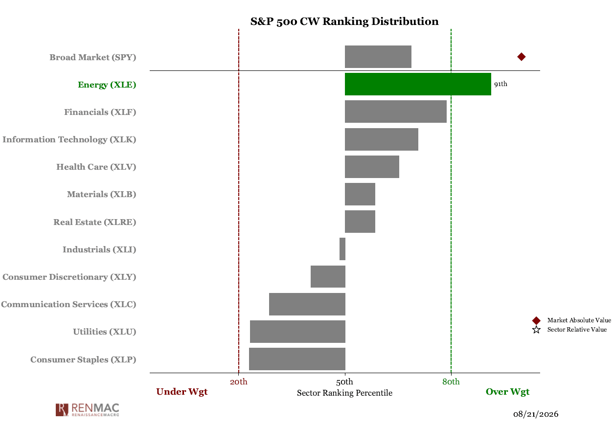 Chart of the weekFrom the FOMC Minutes: "Some participants commented that financial conditions might not currently be sufficiently restrictive to facilitate a return of inflation to 2%." Since July FOMC, we've seen the S&P 500 rise 5%, the broad USD at at mult-month lows, and 10s basically going nowhere. Good luck.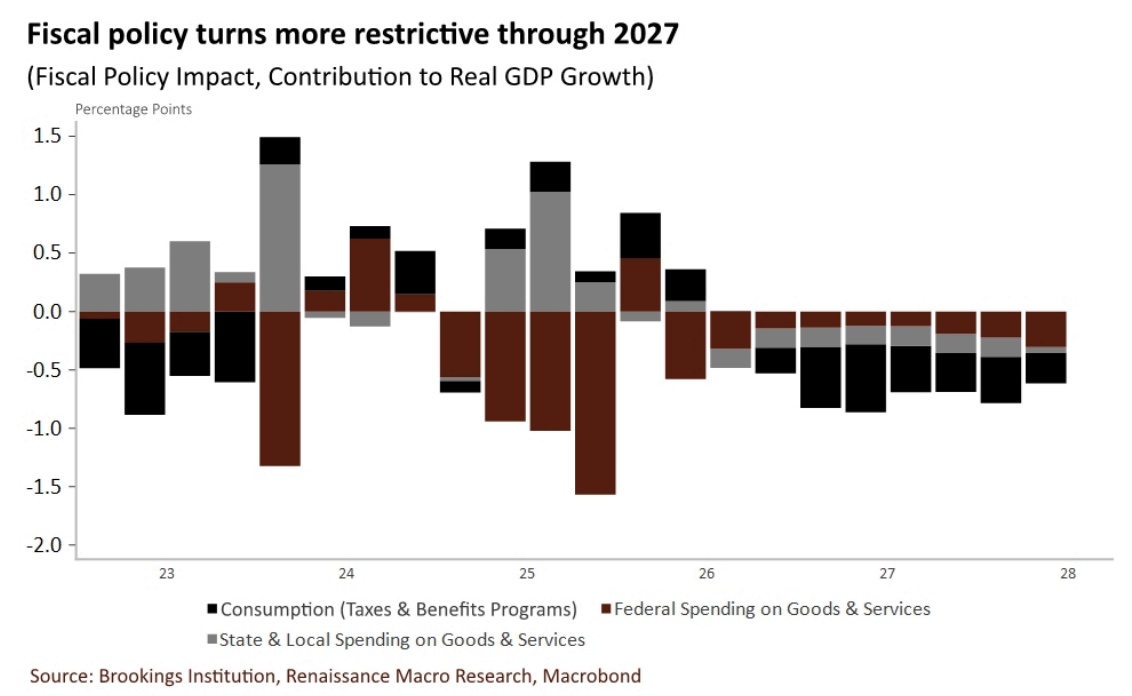
RenMac Off-Script Podcast

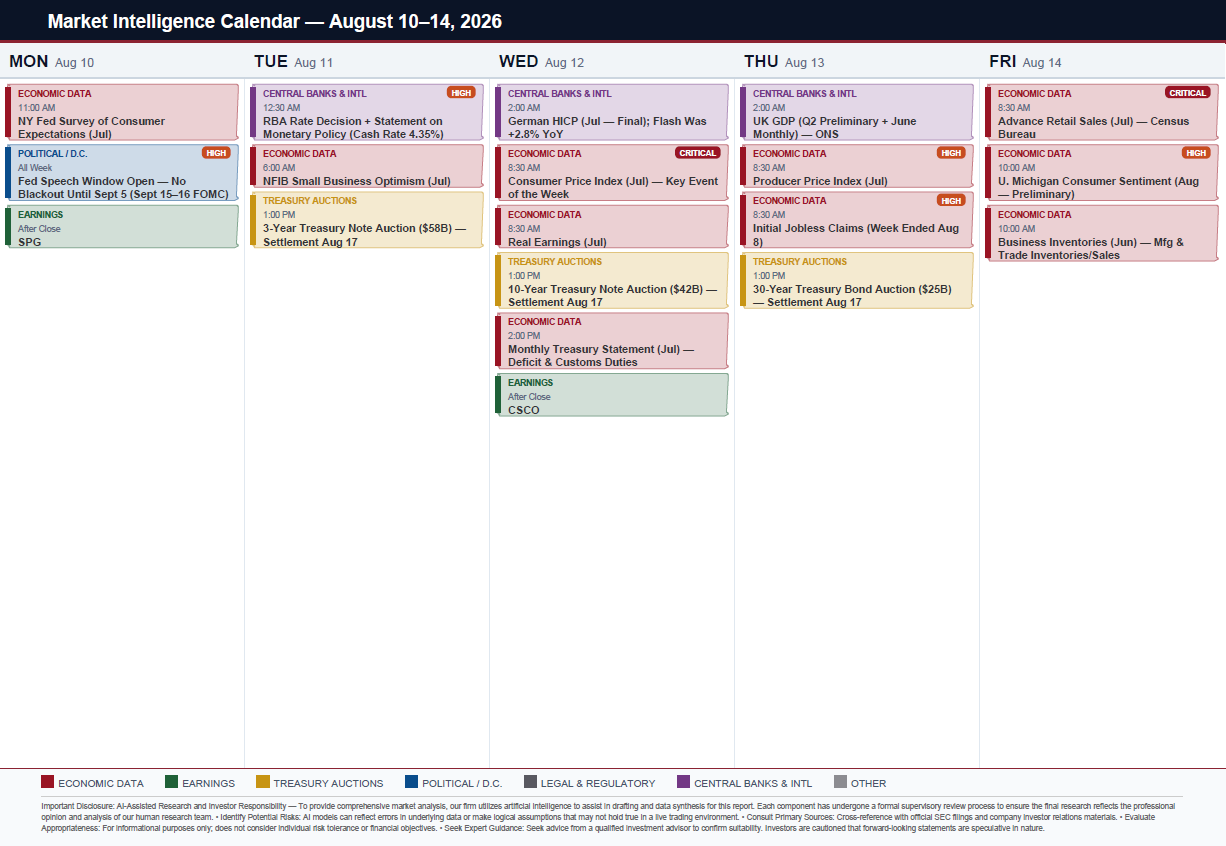
RenMac Calendar
Research Notes
Economics
- US labor market continues its downtrend. Weekly job postings continue to trend down, layoffs picking up, quits are cooling.
- March data showed broad economic weakness, with declines in services, confidence, housing, and commercial real estate.
- Rising inflation, weakening job outlooks, and cautious business spending point to growing economic strain.
- Home prices are cooling, which may curb spending as household wealth dips and the savings rate edges higher.
- The rebound in capital goods shipments looks fragile, with growth mostly tied to tech and broader investment plans weakening.
- New tariffs could cut 0.5% from GDP, strain trade ties, and raise car prices before production shifts take effect.
- Auto repossessions are at their highest since 2009, and tariffs may push buyers to the used market, keeping prices elevated.
- Despite trade tensions, signs of de-escalation and strong profits offer some cushion, with markets already pricing in much of the downside.
- Q4 growth was lifted by consumer and government spending, but with investment falling and key supports fading, a broader slowdown seems likely.
Strategy
- Market technicals show potential for a rebound. We think Mag7 approaches 50dma and potentially crosses through, getting to overbought, high beta stocks slowly recovering, and excessive outflows in IWM and SPY could fuel a tactical bounce.
- Remember, this was a beta-driven correction, not a momentum-driven one.
- Remember, this was a beta-driven correction, not a momentum-driven one.
- Bullish signals may re-emerge if a high percentage of stocks move about their 20dma and hit 20-day highs, suggesting a reassertion of the bull trend.
- Despite heightened policy uncertainty and a dark cross in tech, strong credit markets and sentiment tied to returns suggest the current pessimism may be overdone.
- Semi's continue to weaken, with even "good" ones coming under pressure.
- Staples pulled back at resistance levels, maintaining relative downtrend. Sharp unwind in beta and extreme underperformance suggests continued downward pressure.
- Transports reiterate bearish trend but flagging oversold and in "seller's frenzy". Expect short-term tactical bounce but fade the move.
Policy
- Debt limit deadline ("X-Date") likely between July and October, with resolution hinging on reconciliation or bipartisan deal amid uncertain cash flows.
- Delays risk market volatility and a Moody's downgrade, raising U.S. borrowing costs.
- Delays risk market volatility and a Moody's downgrade, raising U.S. borrowing costs.
- Trump will announce reciprocal tariffs on April 2, targeting about 15 key partners; recent moves on oil, autos, and threats to the EU and Canada may be strategic leverage.
- Section 232 is being used more broadly to justify tariffs on national security grounds, covering autos, copper, timber, and pharma, with an emphasis on U.S. production.
- Tariff timing and scope remain unclear, with Trump using them as a flexible tool, adding to market uncertainty.
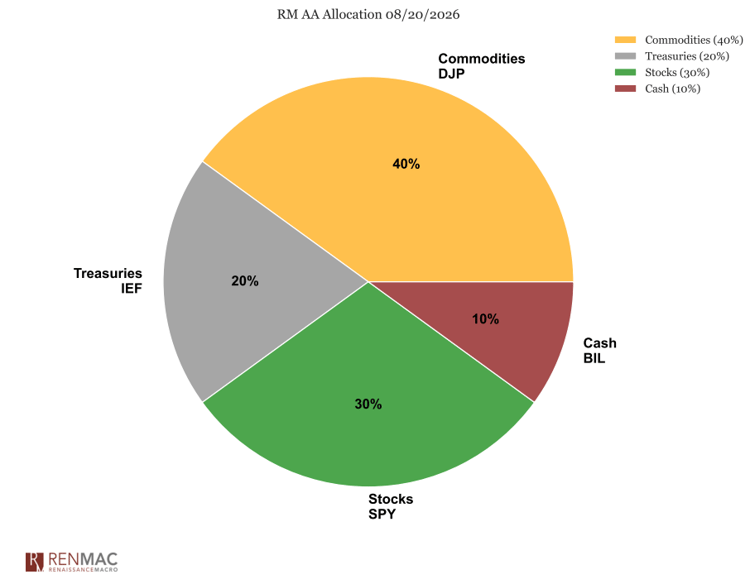
Asset Allocation Model
 Sector Ranks
  Chart of the week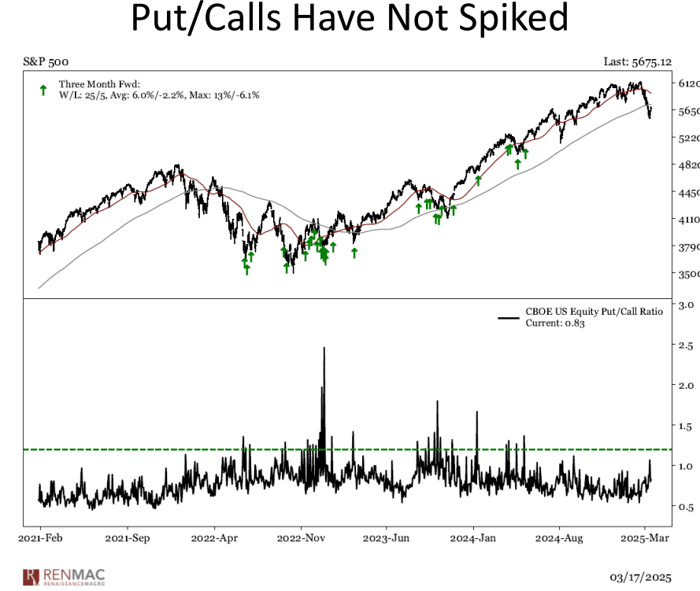
Sector Ranks Chart of the week