Research Notes
Strategy
- Wednesday's CPI handed the rotation its permission slip. July inflation printed 3.4% headline and 2.5% core, cool enough to nudge the Fed toward a September hold (only a 38% probability of hike), yet the long end refused to celebrate, the 30- year parked at 5.24%, a hair from its high.
- Front end easing, long end sticky: that combination is a discount-rate tax on the longest-duration growth trade and a gift to the curve-and-cash-flow crowd.
- Banks are bullish and printing new highs, a steeper 2s10s at +47 basis points is doing some of the heavy lifting. Energy remains our number-one momentum group. Health care services also look like a buyable consolidation.
- Beneath the surface, our RenMac Momentum (winners minus losers) logged a 65-day return in the 7th percentile of its expanding history; the same read for Technology sits in the 4th. Much of the decline has come with the bottom quintile rallying while the top quintile has stalled.
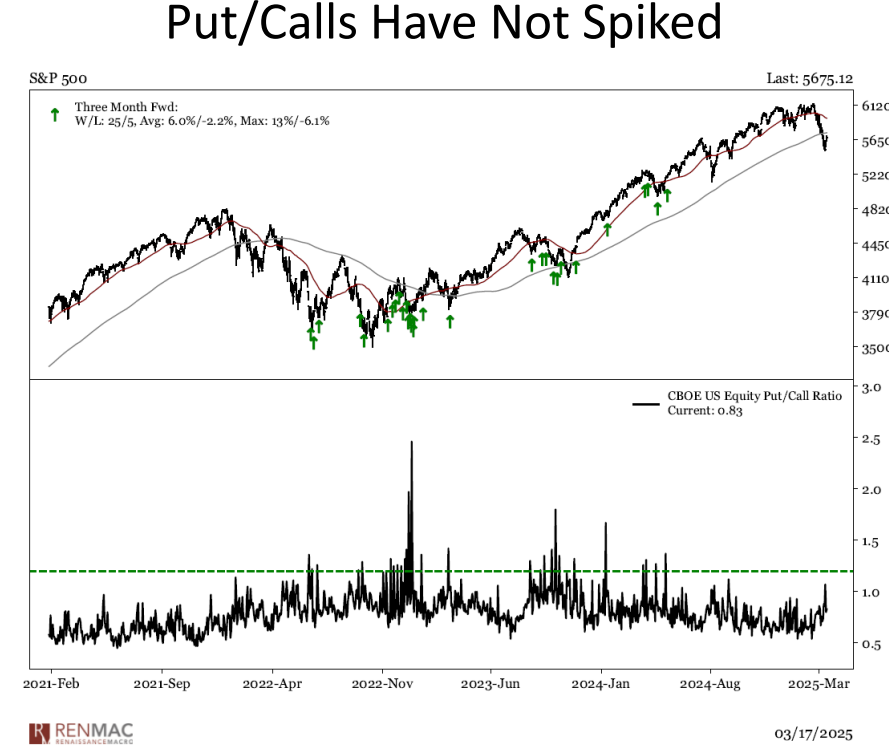
- The crowded leadership has stalled with elevated volatility wings (people willing to pay for upside/downside exposure), the history suggests selling those fat premiums to willing directional participants.
- The crowded leadership has stalled with elevated volatility wings (people willing to pay for upside/downside exposure), the history suggests selling those fat premiums to willing directional participants.
- When money leaves momentum leaders, it has to land somewhere, and some of it is landing on things you can drop on your foot.
- Our Materials work turned bullish-improving this week as the equal-weight group cleared a year-long wedge.
- Steel screens a 99 on our momentum rank, copper an 86, both on relative breakouts of a sort we haven't seen since the last cyclical upturn.
- Gold is overbought, and trends were dented enough to not chase here, but a retest of support and more base building starts to look interesting.
- "Forget chips — AI is a power trade," ran the Motley Fool on Monday, and the proposed NextEra–Dominion tieup hands the thesis its marquee. When a story crystalizes that cleanly, we get nervous, and the tape is starting to agree.
- Our relative-trend work just flipped both utilities and the independent power producers to bearish, the IPPs rolling off a rounded top that had been the AI second-derivative's purest expression.
- The post-bubble unwind is likely not over, with the weak bounce suggesting more chop and grinding downside ahead.
- Momentum has reset short-term, but longer-term excess remains, leaving room for further deterioration.
- See this video from Jeff deGraaf explaining more.
Economics
- July CPI was broadly in line, with core inflation up 0.2% and running at just 1.6% annualized over the past 3 months. That keeps the doves alive, but 2 good months after 5 bad ones is hardly a victory lap.
- Goods inflation is showing some heat, led by information technology, recreation and vehicles. Services remain much better behaved, with core services running at just 2.2% annualized over the past 3 months.
- Shelter inflation is stabilizing around 3% annualized, while services excluding rents and energy rose 0.2%. The CPI/PCE wedge remains important as well.
- The Fed's September decision is increasingly about the labor market, not just inflation. The recent drop in unemployment may matter more for policy than the CPI print.
- The bar for a September hike remains low. If the hawks cannot deliver in September, the window for a hike later this year likely narrows considerably.
- The key inflation story is the widening gap between core PCE and core CPI, with core PCE now running 0.7ppt above CPI versus 0.2ppt below a year ago. That matters because the Fed targets PCE, not CPI.
- July retail sales were softer than they looked, largely because Prime Day shifted from July to June. Averaging the 2 months, core retail sales and food services rose just 0.1% per month, pointing to a meaningful downgrade to Q3 real consumer spending.
- The composition was better than the headline. Food services rose 0.5% for a 4th straight month and clothing sales jumped 1.9%, while electronics, sporting goods, and other discretionary categories softened.
- Consumer spending likely peaked in Q2, with income growth slowing, sustaining the recent pace of nominal spending will be difficult, and high-frequency data through August suggest more cooling ahead.
- Small business sentiment improved meaningfully in July, with the NFIB Optimism Index rising 2.4 points to its best level since August 2025. Firms are also more optimistic about hiring capital and spending.
- Some of the improvement may prove temporary. Falling oil prices helped ease inflation concerns, but oil has since moved higher, while rising Treasury yields point to higher borrowing costs for small firms.
- Labor remains a key constraint, with quality of labor jumping as a top concern. Small businesses are more willing to hire and invest, but the test is whether that confidence translates into actual activity in Q3.
 Sector Ranks
 .png?width=614&height=418&name=Image%202026-08-14%20at%201.58%20PM%20(1).png) Chart of the weekThe growth outlook faces a double headwind from increasingly restrictive fiscal policy and slowing consumption. Federal spending is expected to subtract roughly 0.2ppt from GDP growth per quarter over the next year, while weaker state and local government activity adds to the drag. At the same time, consumer spending is likely to moderate as income growth slows, with aggregate weekly payrolls rising just 2.7% annualized over the past 3 months. If consumption growth falls from 3% to 2% GDP growth takes a 0.7ppt hit, creating a meaningful hurdle for business investment to overcome.
Chart of the weekThe growth outlook faces a double headwind from increasingly restrictive fiscal policy and slowing consumption. Federal spending is expected to subtract roughly 0.2ppt from GDP growth per quarter over the next year, while weaker state and local government activity adds to the drag. At the same time, consumer spending is likely to moderate as income growth slows, with aggregate weekly payrolls rising just 2.7% annualized over the past 3 months. If consumption growth falls from 3% to 2% GDP growth takes a 0.7ppt hit, creating a meaningful hurdle for business investment to overcome.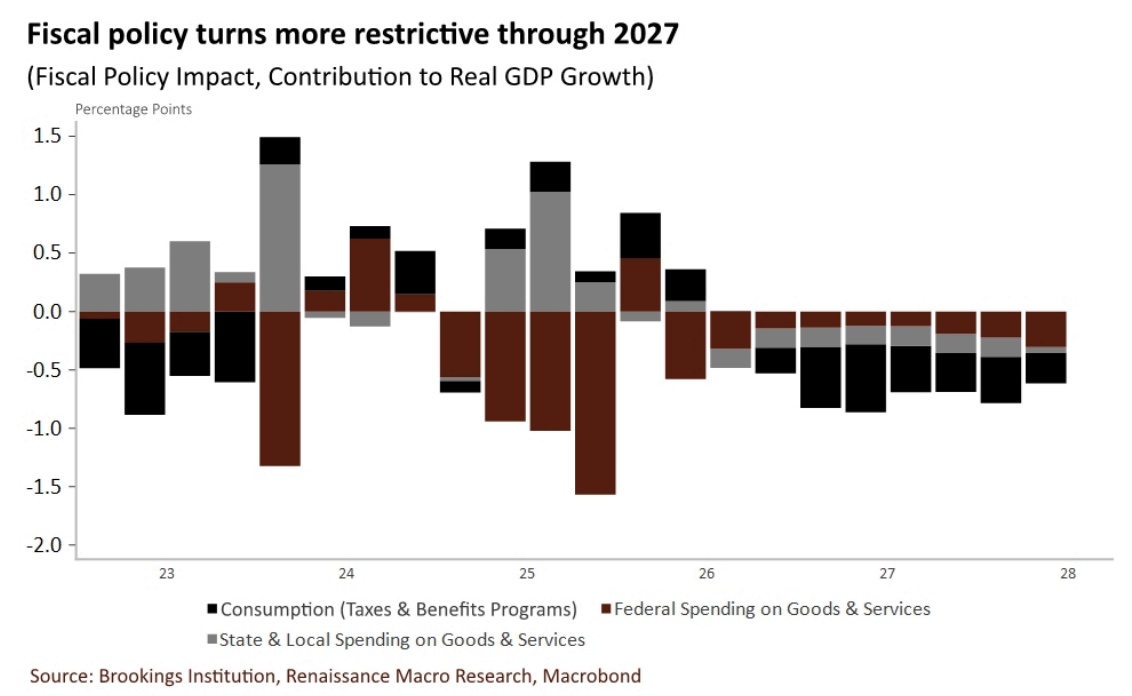
RenMac Off-Script Podcast

RenMac Calendar
Research Notes
Economics
- US labor market continues its downtrend. Weekly job postings continue to trend down, layoffs picking up, quits are cooling.
- March data showed broad economic weakness, with declines in services, confidence, housing, and commercial real estate.
- Rising inflation, weakening job outlooks, and cautious business spending point to growing economic strain.
- Home prices are cooling, which may curb spending as household wealth dips and the savings rate edges higher.
- The rebound in capital goods shipments looks fragile, with growth mostly tied to tech and broader investment plans weakening.
- New tariffs could cut 0.5% from GDP, strain trade ties, and raise car prices before production shifts take effect.
- Auto repossessions are at their highest since 2009, and tariffs may push buyers to the used market, keeping prices elevated.
- Despite trade tensions, signs of de-escalation and strong profits offer some cushion, with markets already pricing in much of the downside.
- Q4 growth was lifted by consumer and government spending, but with investment falling and key supports fading, a broader slowdown seems likely.
Strategy
- Market technicals show potential for a rebound. We think Mag7 approaches 50dma and potentially crosses through, getting to overbought, high beta stocks slowly recovering, and excessive outflows in IWM and SPY could fuel a tactical bounce.
- Remember, this was a beta-driven correction, not a momentum-driven one.
- Remember, this was a beta-driven correction, not a momentum-driven one.
- Bullish signals may re-emerge if a high percentage of stocks move about their 20dma and hit 20-day highs, suggesting a reassertion of the bull trend.
- Despite heightened policy uncertainty and a dark cross in tech, strong credit markets and sentiment tied to returns suggest the current pessimism may be overdone.
- Semi's continue to weaken, with even "good" ones coming under pressure.
- Staples pulled back at resistance levels, maintaining relative downtrend. Sharp unwind in beta and extreme underperformance suggests continued downward pressure.
- Transports reiterate bearish trend but flagging oversold and in "seller's frenzy". Expect short-term tactical bounce but fade the move.
Policy
- Debt limit deadline ("X-Date") likely between July and October, with resolution hinging on reconciliation or bipartisan deal amid uncertain cash flows.
- Delays risk market volatility and a Moody's downgrade, raising U.S. borrowing costs.
- Delays risk market volatility and a Moody's downgrade, raising U.S. borrowing costs.
- Trump will announce reciprocal tariffs on April 2, targeting about 15 key partners; recent moves on oil, autos, and threats to the EU and Canada may be strategic leverage.
- Section 232 is being used more broadly to justify tariffs on national security grounds, covering autos, copper, timber, and pharma, with an emphasis on U.S. production.
- Tariff timing and scope remain unclear, with Trump using them as a flexible tool, adding to market uncertainty.
Asset Allocation Model
 Sector Ranks
  Chart of the week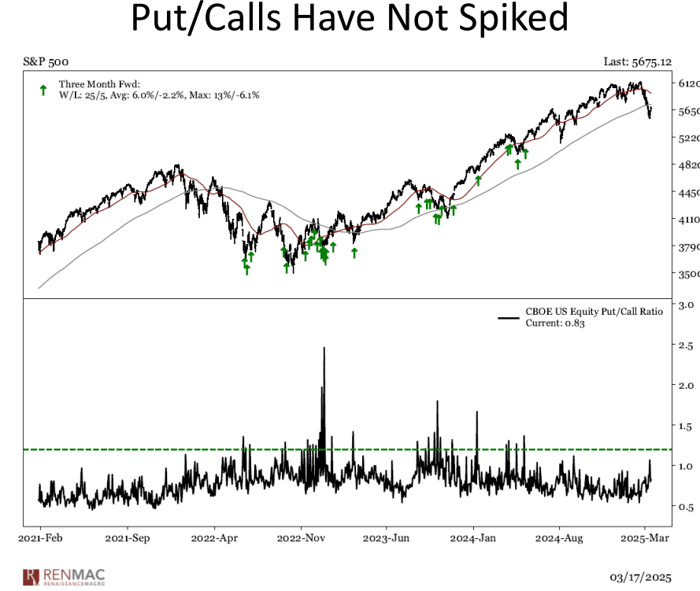
Sector Ranks Chart of the week